
Creating a heartfelt connection through customized cards transforms ordinary occasions into memorable moments. When you make personalized greeting cards, you're crafting something far more meaningful than store-bought alternatives-you're creating tangible expressions of care, celebration, and thoughtfulness that recipients treasure for years. Whether you're designing birthday wishes, holiday greetings, or special event announcements, personalized cards offer unlimited creative potential combined with emotional impact that digital messages simply cannot match.
Mục Lục
- 1 Understanding the Value of Custom Card Creation
- 2 Essential Materials and Tools for Card Creation
- 3 Design Principles for Memorable Cards
- 4 Step-by-Step Card Construction Techniques
- 5 Advanced Techniques: Pop-Up and Dimensional Cards
- 6 Digital Design Integration
- 7 Occasion-Specific Card Ideas
- 8 Personalization Strategies That Resonate
- 9 Crafting for Business and Bulk Needs
- 10 Quality Control and Finishing Details
- 11 Environmental Considerations in Card Making
- 12 Storage and Preservation Techniques
- 13 Troubleshooting Common Card-Making Challenges
- 14 Cost Analysis and Budget Management
- 15 Building Card-Making Skills Over Time
Understanding the Value of Custom Card Creation
The greeting card industry continues thriving in 2026 because people crave authentic, personal touches in an increasingly digital world. When you make personalized greeting cards, you invest time and creativity into something that reflects your unique relationship with the recipient. This personal investment communicates care in ways that mass-produced cards never achieve.
Custom cards offer several distinct advantages:
- Complete control over design, message, and aesthetic direction
- Ability to incorporate inside jokes, shared memories, or personal photographs
- Freedom to match the recipient's personality, interests, and preferences
- Cost savings compared to premium commercial cards, especially for bulk needs
- Environmental benefits through sustainable material choices
The therapeutic benefits of card-making also deserve recognition. Many crafters report that creating personalized cards provides stress relief, creative satisfaction, and a sense of accomplishment. The process encourages mindfulness while producing tangible results that brighten someone's day.
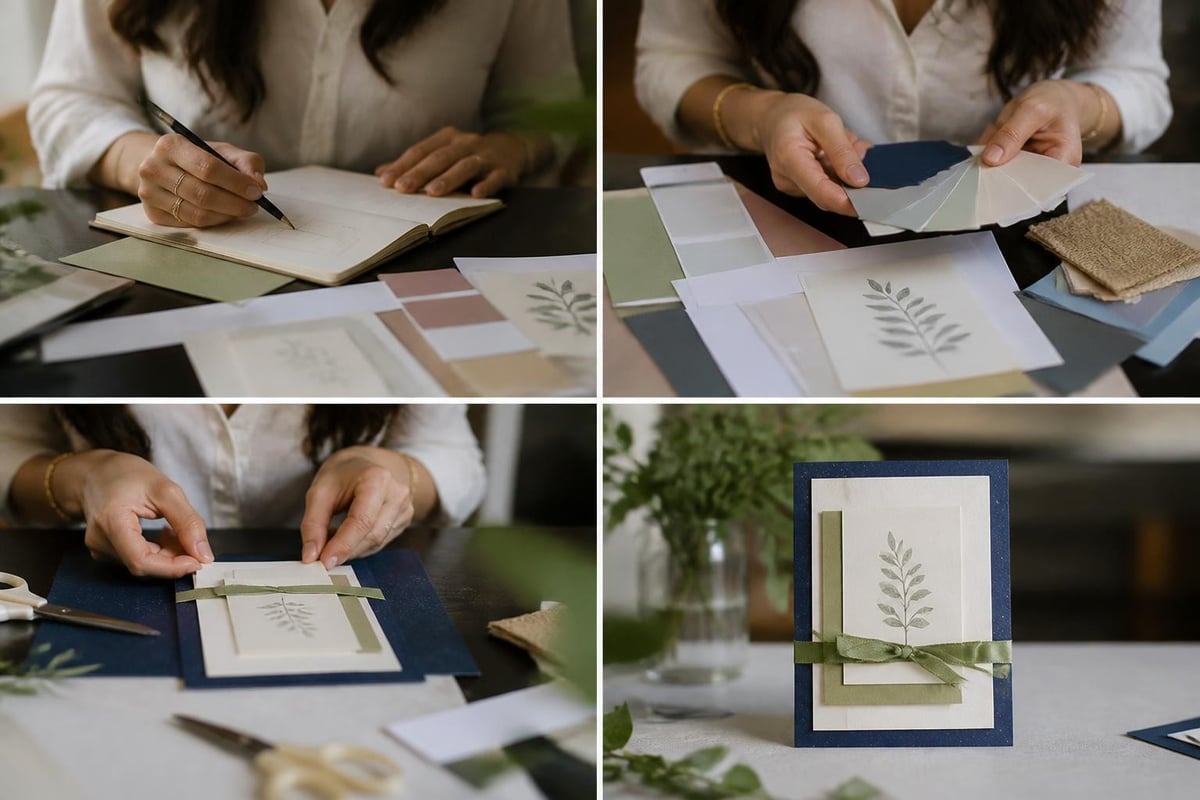
Essential Materials and Tools for Card Creation
Starting your card-making journey requires assembling the right supplies. Basic materials include cardstock in various weights and colors, adhesives suitable for different applications, and cutting tools ranging from scissors to precision craft knives. Quality matters significantly-premium cardstock creates professional-looking results that recipients appreciate and preserve.
Core Supply List
| Material Category | Essential Items | Optional Upgrades |
|---|---|---|
| Paper Products | Cardstock, patterned paper, envelopes | Textured papers, metallic sheets, vellum |
| Adhesives | Glue stick, double-sided tape | Foam tape, liquid glue, wax seals |
| Cutting Tools | Scissors, ruler, craft knife | Paper trimmer, die-cut machine, precision blades |
| Embellishments | Stickers, ribbon, stamps | Sequins, buttons, dried flowers, 3D elements |
| Writing Tools | Fine-tip pens, markers | Calligraphy pens, metallic markers, embossing pens |
Advanced creators often invest in specialized equipment like embossing tools, scoring boards, and electronic cutting machines. These tools expand creative possibilities but aren't necessary for beginners learning to make greeting cards effectively.
Organizing Your Workspace
Efficient organization transforms card-making from frustrating to enjoyable. Designate specific storage for different material categories-separate compartments for embellishments, paper organizers sorted by color or theme, and tool holders keeping scissors and adhesives within easy reach. Good lighting prevents eye strain during detailed work, while a clean, flat surface ensures precise cutting and assembly.
Design Principles for Memorable Cards
Successful card design balances visual appeal with emotional resonance. Before selecting materials or sketching layouts, consider the recipient's preferences, the occasion's tone, and the message you want to convey. A minimalist approach suits sophisticated celebrations, while vibrant, layered designs work beautifully for children's birthdays or festive holidays.
Key design elements include:
- Color harmony – Choose palettes that evoke appropriate emotions and complement each other
- Focal points – Direct the eye to the most important element, whether text or imagery
- White space – Avoid cluttering by leaving breathing room around design elements
- Typography – Select fonts that enhance readability while reflecting the card's personality
- Balance – Distribute visual weight evenly across the card's surface
When you make personalized greeting cards, experiment with different compositional techniques. The rule of thirds applies to card design just as it does to photography-placing key elements off-center often creates more dynamic, interesting layouts than perfectly centered arrangements.
Step-by-Step Card Construction Techniques
Creating professional-looking cards follows a logical progression from planning through finishing touches. Start by determining your card's dimensions-standard sizes like 5×7 inches or A6 fit readily available envelopes, but custom dimensions add uniqueness for special occasions.
Basic Assembly Process
Planning phase:
Score your cardstock precisely where folds will occur, using a bone folder to create crisp, professional creases. Measure twice before cutting to avoid material waste. Sketch your layout lightly in pencil, marking where different elements will attach.
Construction phase:
Layer elements from background to foreground, allowing adhesives to dry fully between stages. This prevents shifting and ensures secure attachment. When adding dimensional elements, consider the card's ability to fit in an envelope-excessive bulk may require special packaging.
Finishing phase:
Review your card from multiple angles, checking for loose elements, visible adhesive, or smudged ink. Sign and date the back if creating keepsake cards. Insert into appropriate envelopes, considering whether additional protection is needed for embellished designs.
For those seeking detailed customization guidance, numerous resources provide technique-specific tutorials covering everything from watercolor backgrounds to intricate paper-cutting methods.
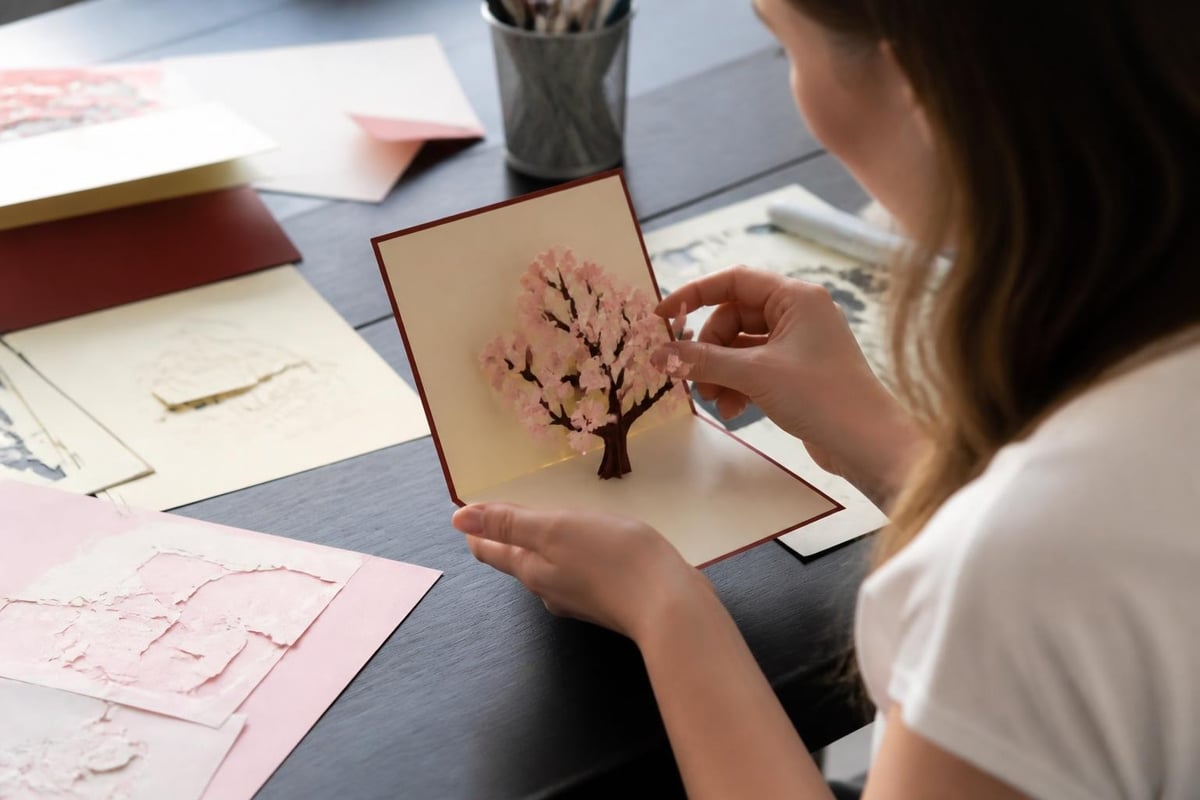
Advanced Techniques: Pop-Up and Dimensional Cards
Three-dimensional cards create unforgettable moments when recipients open them. Pop-up mechanisms range from simple V-folds to complex architectural structures that seem to defy physics. These cards demonstrate exceptional creativity and craftsmanship that elevates any occasion.
Pop-Up Construction Basics
| Mechanism Type | Difficulty Level | Best Applications |
|---|---|---|
| V-Fold | Beginner | Simple shapes, hearts, basic structures |
| Box Fold | Intermediate | Buildings, cakes, gift boxes |
| Floating Layers | Intermediate | Scenes with depth, landscapes |
| Rotating Elements | Advanced | Interactive designs, surprise reveals |
| Compound Structures | Advanced | Elaborate scenes, architectural replicas |
Manufacturing pop-up cards at scale requires specialized expertise and equipment. Pop up greeting card factories in Vietnam combine precision laser cutting with skilled hand assembly to produce consistent, high-quality results for businesses requiring bulk quantities. This approach delivers professional dimensional cards that individual crafters find challenging to replicate with the same precision.
When you make personalized greeting cards with pop-up elements, engineering precision matters as much as artistic vision. Test mechanisms thoroughly before adding decorative elements-nothing disappoints more than a beautiful card that fails to pop properly. Understanding paper grain direction, score line depth, and adhesive placement separates functional pop-ups from frustrating failures.
Digital Design Integration
Modern card creation often blends digital and physical techniques. Design software enables precise layouts, custom illustrations, and text manipulation impossible with purely analog methods. Programs ranging from professional suites to free online tools provide templates and design elements that jumpstart the creative process.
Digital tools enhance card creation through:
- Photo editing and manipulation for personalized imagery
- Typography control for professional-looking text
- Color matching across multiple design elements
- Template libraries for consistent sizing and layouts
- Digital printing capabilities for complex graphics
After finalizing digital designs, print them on quality cardstock using appropriate printer settings. Many crafters combine printed elements with hand-drawn details, creating hybrid cards that showcase both technical precision and personal touch. This approach works particularly well for cards requiring multiple identical copies while maintaining personalized elements.
Resources for creating greeting cards online demonstrate how digital platforms simplify design while maintaining creative control. These tools particularly benefit those creating cards in bulk for events or business purposes.
Occasion-Specific Card Ideas
Different occasions call for distinct approaches when you make personalized greeting cards. Birthday cards might incorporate the recipient's hobbies, favorite colors, or milestone numbers as central design elements. Anniversary cards benefit from romantic imagery, metallic accents, and sophisticated color palettes that reflect the relationship's depth.
Holiday Card Considerations
Holiday cards present unique opportunities and challenges. Christmas cards often feature traditional imagery but gain impact through unexpected color combinations or modern design interpretations. Consider creating series designs that maintain consistent branding across multiple recipients while allowing individual personalization.
Seasonal card success factors:
- Plan designs months ahead to allow adequate creation time
- Purchase materials in bulk during off-season sales
- Create assembly-line workflows for multiple identical cards
- Personalize each card with handwritten names or messages
- Track recipients year-over-year to avoid duplicate designs
Wedding and baby shower cards deserve extra attention to detail and quality materials. These keepsake cards often get displayed or preserved in memory books, making durability and aesthetic excellence particularly important. Delicate embellishments like ribbon, lace, or dried flowers elevate these special occasion cards beyond everyday greetings.
Exploring all-occasion card concepts provides inspiration for diverse celebrations throughout the year, helping you develop versatile design skills applicable across multiple contexts.
Personalization Strategies That Resonate
True personalization extends beyond adding the recipient's name. Thoughtful customization references shared experiences, incorporates meaningful symbols, or reflects the recipient's personality in subtle ways. A gardening enthusiast appreciates floral motifs and earth-tone palettes, while a music lover might enjoy cards featuring instruments or musical notation as design elements.
Effective personalization techniques include:
- Incorporating photographs from shared memories or experiences
- Using colors from the recipient's favorite sports team or alma mater
- Including quotes from books, movies, or songs meaningful to your relationship
- Creating custom illustrations of the recipient's pets, home, or interests
- Handwriting personal messages in distinctive penmanship rather than typed text
Research shows handwritten elements significantly increase emotional impact. Even if your primary design is printed or digitally created, adding handwritten signatures, dates, or brief personal notes transforms cards from generic to genuinely personal.
Crafting for Business and Bulk Needs
Businesses requiring personalized cards face different challenges than individual crafters. Consistency, scalability, and professional presentation become paramount when creating cards for client appreciation, employee recognition, or corporate events. When you make personalized greeting cards for business purposes, balancing personal touch with brand consistency requires strategic planning.
Streamlining Bulk Production
Production efficiency strategies:
- Design templates accommodating variable elements like names or messages
- Batch similar production steps across multiple cards simultaneously
- Invest in equipment enabling consistent, repeatable results
- Establish quality control checkpoints throughout the production process
- Partner with specialized manufacturers for large-scale needs
For businesses requiring hundreds or thousands of custom cards, manufacturing partnerships often prove more practical than in-house production. Professional card manufacturers offer design consultation, materials sourcing, and production capabilities that ensure consistent quality across large orders while freeing internal resources for core business activities.
Finding design inspiration helps businesses develop signature card styles that reinforce brand identity while maintaining the personal touch that makes custom cards valuable.
Quality Control and Finishing Details
The difference between amateur and professional-looking cards often lies in finishing details. Examine each card critically before declaring it complete-check for visible adhesive, ensure all elements adhere securely, verify text accuracy, and confirm the card opens and closes smoothly without catching or tearing.
| Quality Checkpoint | What to Verify | Common Issues to Avoid |
|---|---|---|
| Adhesion | All elements firmly attached | Loose corners, peeling layers |
| Text | Spelling, grammar, proper names | Typos, incorrect dates |
| Alignment | Centered elements, straight edges | Crooked placement, uneven margins |
| Mechanism | Smooth opening/closing | Resistance, tearing at folds |
| Cleanliness | No smudges, fingerprints, or marks | Ink smears, visible glue |
Professional presentation extends to envelope selection and addressing. Choose envelopes matching your card's size with minimal extra space-too much room allows cards to shift during mailing, potentially damaging delicate elements. Consider hand-addressing envelopes for maximum personal impact, or use printed labels with attractive fonts if addressing numerous cards.
Environmental Considerations in Card Making
Sustainable card creation appeals to environmentally conscious crafters and recipients. When you make personalized greeting cards using eco-friendly materials and practices, you demonstrate values alignment that resonates with today's awareness of environmental impact. Recycled cardstock, plant-based inks, and biodegradable embellishments reduce ecological footprint without sacrificing aesthetic quality.
Sustainable material choices:
- Cardstock with post-consumer recycled content percentages
- Vegetable-based or soy inks for printing and stamping
- Natural fiber ribbons and twines instead of synthetic materials
- Dried flowers, leaves, or seed paper as embellishments
- Water-based adhesives avoiding harsh chemical solvents
Encourage card reuse by designing pieces that recipients can display as small art pieces or repurpose into gift tags, bookmarks, or framed mementos. This extended lifespan amplifies your card's value while reducing waste. Some crafters even create cards from upcycled materials like vintage book pages, fabric scraps, or reclaimed wallpaper samples, adding unique character while minimizing environmental impact.
Storage and Preservation Techniques
Properly storing finished cards protects your investment of time and materials. Flat storage in acid-free boxes prevents curling, fading, and damage from environmental factors. Separate delicate cards with tissue paper to prevent embellishment transfer or scratching. Climate-controlled environments minimize humidity-related warping or adhesive failure.
For cards created significantly in advance of their giving occasion, document each card's intended recipient and event to prevent confusion later. Simple inventory systems-whether digital spreadsheets or handwritten logs-ensure the right card reaches the right person at the appropriate time.
Troubleshooting Common Card-Making Challenges
Even experienced crafters encounter occasional setbacks. Adhesive showing through translucent papers frustrates many beginners-solution involves using minimal glue in thin layers or switching to double-sided tape for sheer materials. Uneven folds create unprofessional appearances-prevent this by scoring before folding and using bone folders for crisp creases.
Common problems and solutions:
- Embellishments falling off – Use stronger adhesives suited to heavier elements, allow longer drying time
- Color inconsistency across batches – Purchase all materials for a project simultaneously to ensure dye lot matching
- Smudged ink or stamping – Allow adequate drying time, use quick-dry inks, handle cards by edges
- Cards too bulky for envelopes – Reduce layering thickness, use thinner cardstock for some layers
- Mechanism failures in pop-ups – Reinforce stress points with additional adhesive, test before final assembly
Learning from mistakes accelerates skill development. When you make personalized greeting cards regularly, you develop intuition about which techniques work reliably and which require modification for specific applications. Detailed tutorials like those found in comprehensive card-making guides help troubleshoot specific technical challenges.
Cost Analysis and Budget Management
Creating custom cards costs varies dramatically based on materials quality, design complexity, and quantity produced. Individual handmade cards using premium materials might cost $3-8 each, while simpler designs with basic supplies run under $2 per card. These costs still typically undercut high-end commercial cards while delivering superior personalization.
Budget optimization strategies include:
- Purchasing materials in bulk during seasonal sales
- Reusing and repurposing embellishments across multiple projects
- Starting with basic supplies and gradually expanding as skills develop
- Joining card-making communities for supply swaps and group purchases
- Balancing splurge items on focal elements with economical choices for backgrounds
For businesses, cost-per-card analysis must factor design time, materials, labor, and overhead. Small batches inevitably carry higher per-unit costs than large production runs. Understanding these economics helps determine when in-house creation makes sense versus outsourcing to specialized manufacturers offering economies of scale.
Building Card-Making Skills Over Time
Mastery develops through consistent practice and willingness to experiment. When you make personalized greeting cards regularly, techniques that initially seem complex become intuitive. Start with simple designs, gradually incorporating new elements as confidence builds. Document successful techniques and designs for future reference-photography serves both as portfolio and instructional guide for recreating effects.
Joining crafting communities, whether online forums or local workshops, accelerates learning through shared knowledge and constructive feedback. Observing others' techniques reveals alternative approaches you might not discover independently. Many experienced crafters generously share step-by-step tutorials that demystify advanced techniques.
Challenge yourself periodically with technique-focused projects-dedicate one session to mastering watercolor backgrounds, another to exploring different fold mechanisms, another to perfecting calligraphy. Focused skill-building complements project-based learning, creating well-rounded capabilities that enhance all future card creation.
Making personalized greeting cards transforms ordinary occasions into memorable experiences through thoughtful design, quality craftsmanship, and genuine personalization that mass-produced alternatives cannot match. Whether you're creating individual cards for loved ones or require bulk quantities for business purposes, the principles of effective design, quality materials, and attention to detail remain constant. The3dCards specializes in manufacturing custom pop-up cards that combine artistic excellence with reliable production capabilities, offering businesses and individuals access to professionally crafted dimensional cards for any occasion. Our Vietnam-based facility delivers high-quality personalized and bulk greeting card solutions that make every celebration special.