
The winter season brings countless opportunities for greeting card businesses to showcase creativity and craftsmanship. Among the most beloved designs, the pop up snowman stands out as a timeless favorite that combines whimsy with sophisticated paper engineering. These three-dimensional cards transform a simple greeting into an interactive experience, delighting recipients as cheerful snowman figures spring to life when opened. Whether you're a crafting enthusiast, a business owner exploring seasonal product lines, or someone interested in the art of paper engineering, understanding the mechanics and market potential of pop up snowman cards offers valuable insights into this specialized niche.
Mục Lục
- 1 The Engineering Behind Pop Up Snowman Designs
- 2 Crafting Techniques for DIY Enthusiasts
- 3 Commercial Applications and Market Opportunities
- 4 Design Variations and Creative Innovations
- 5 Production Challenges and Solutions
- 6 Customization Options for Business Clients
- 7 Educational and Therapeutic Applications
- 8 Marketing Strategies for Pop Up Snowman Cards
- 9 Quality Standards and Customer Expectations
The Engineering Behind Pop Up Snowman Designs
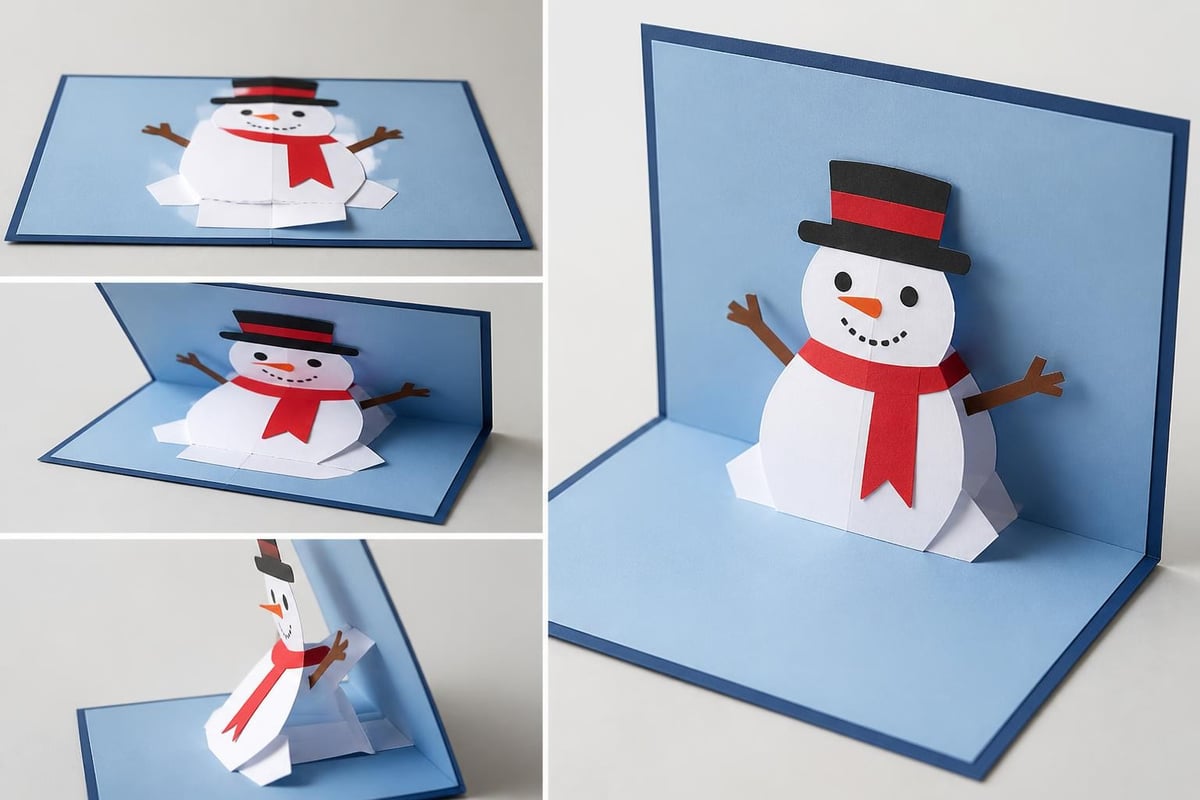
Creating a successful pop up snowman requires understanding fundamental paper engineering principles. The most common mechanism uses parallel folds that create depth when the card opens to a 90-degree angle. This technique allows the snowman's body to stand perpendicular to the card base, creating an impressive dimensional effect.
Core Structural Elements
The typical pop up snowman consists of several key components working in harmony. The base mechanism provides stability, while the snowman body layers create visual depth. Most designs feature three circular segments representing the classic snowman proportions, though creative variations exist.
Essential design components include:
- Base platform with precise score lines for smooth folding
- Layered circular segments that create the snowman body
- Attachment tabs positioned for maximum stability
- Decorative elements like hats, scarves, and facial features
- Optional kinetic elements such as movable arms or rotating accessories
The precision required for a functioning pop up snowman cannot be overstated. Measurements must be exact, with fold lines scored at precise angles to ensure the mechanism operates smoothly. Even a millimeter's deviation can cause the structure to collapse or fail to pop up properly.
Material Selection and Quality
Professional manufacturers understand that paper quality directly impacts the final product's performance and longevity. Standard cardstock weights range from 200 to 300 GSM for the base, while decorative elements might use lighter weights for easier manipulation. Premium art paper provides superior color reproduction and durability, essential factors when creating products meant to be kept as keepsakes.
| Material Type | Weight (GSM) | Best Application | Durability |
|---|---|---|---|
| Base Card | 250-300 | Card foundation | Excellent |
| Pop-up Elements | 200-250 | Snowman body | Very Good |
| Decorative Details | 150-200 | Accessories, features | Good |
| Overlay Pieces | 120-150 | Texture, patterns | Moderate |
The history of pop-up cards reveals how material innovations have expanded creative possibilities, allowing modern designers to achieve effects impossible in earlier eras.
Crafting Techniques for DIY Enthusiasts
For those interested in creating their own pop up snowman cards, several proven techniques offer varying complexity levels. Beginners often start with simple templates, while advanced crafters develop custom designs from scratch.
Template-Based Construction
Using pre-designed templates provides an excellent entry point for newcomers to paper crafting. Numerous resources offer printable templates that guide users through the cutting and assembly process. These templates typically include dotted lines for folds, solid lines for cuts, and numbered tabs for assembly sequence.
The basic construction process follows these steps:
- Print the template on appropriate cardstock
- Score all fold lines using a bone folder or blunt edge
- Cut along designated solid lines with precision scissors or craft knife
- Fold each section according to template instructions
- Apply adhesive to designated tabs
- Attach components in numbered sequence
- Add decorative embellishments and finishing touches
This methodical approach ensures consistent results even for first-time crafters. Similar techniques apply across various origami pop-up card designs, where precision folding creates dimensional effects.
Advanced Custom Design Methods
Experienced paper engineers often develop their own pop up snowman patterns, adjusting dimensions and mechanisms to create unique effects. This process requires understanding geometric principles and how two-dimensional cuts translate into three-dimensional forms.
Key considerations for custom designs:
- Calculating proper angle relationships between base and vertical elements
- Determining optimal tab placement for structural integrity
- Balancing visual appeal with mechanical functionality
- Testing prototypes to refine measurements
- Creating assembly instructions for reproducible results
Creating variations keeps designs fresh and appealing. Some crafters experiment with paper chain techniques that add texture and movement to traditional pop up snowman structures.
Commercial Applications and Market Opportunities
The pop up snowman represents significant commercial potential for greeting card businesses. These specialty items command premium pricing compared to flat cards, with wholesale prices reflecting the additional labor and materials involved in production.
Wholesale Manufacturing Considerations
Professional production requires balancing handcrafted quality with efficient manufacturing processes. High-precision laser cutting technology enables consistent, clean cuts across large production runs, while skilled artisans handle the intricate assembly work that automated systems cannot replicate.
For businesses looking to enter or expand in this market, partnering with an established pop-up card manufacturing facility provides access to specialized equipment and experienced craftspeople. This approach allows retailers to offer premium products without investing in the infrastructure required for in-house production.
Manufacturing at scale involves several critical steps:
- Design finalization and prototype approval
- Template programming for laser cutting systems
- Material sourcing and quality verification
- Precision cutting of card components
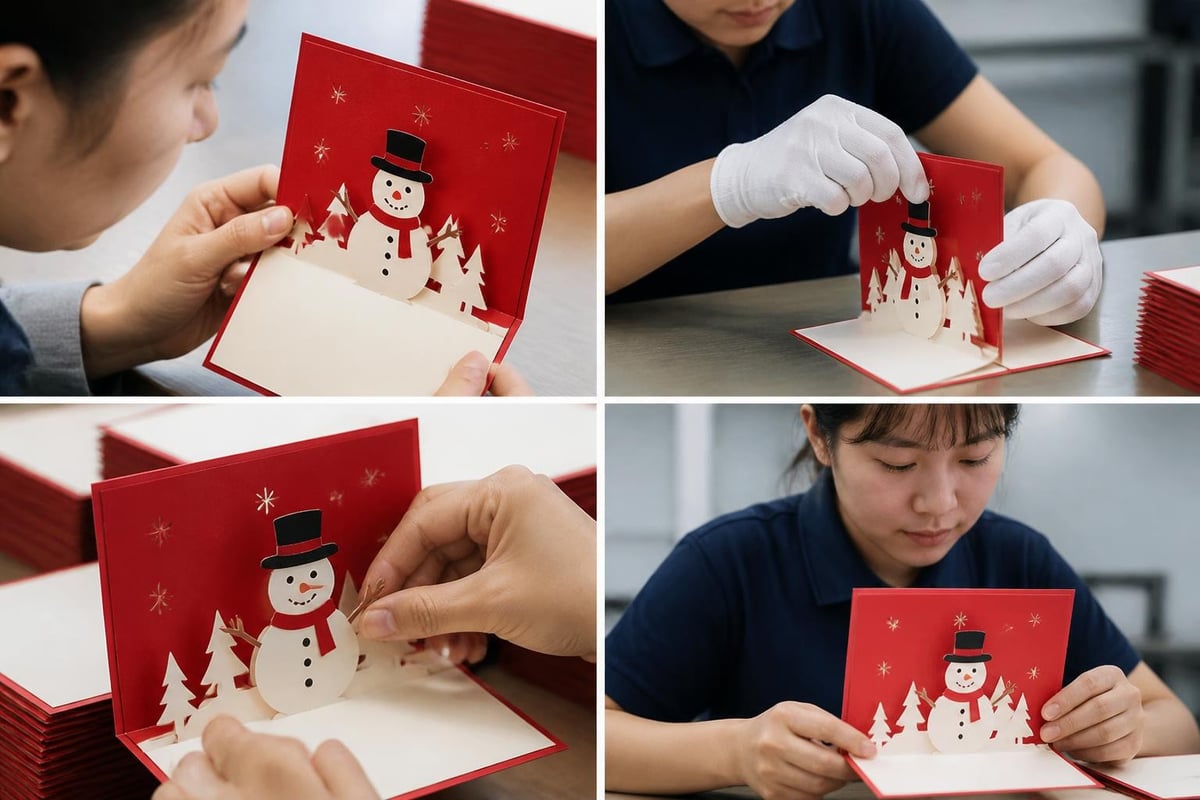
- Hand assembly by trained artisans
- Multi-stage quality control inspection
- Packaging and shipping logistics
Pricing and Market Positioning
Understanding the market landscape helps businesses position their pop up snowman offerings competitively. Retail prices typically range from premium to luxury categories, depending on complexity, size, and customization options.
| Product Tier | Retail Price Range | Features | Target Market |
|---|---|---|---|
| Standard | $4.95-$7.95 | Basic design, mass-produced | General consumers |
| Premium | $8.95-$14.95 | Enhanced details, quality paper | Gift-focused buyers |
| Luxury | $15.95-$24.95 | Complex mechanisms, customization | Corporate, special occasions |
| Custom Corporate | $25+ | Branded elements, bulk orders | Business clients |
The pop up snowman fits naturally into broader product lines, complementing other seasonal offerings. Businesses might pair these cards with birthday greeting cards in bulk or other themed collections to maximize order values.
Design Variations and Creative Innovations
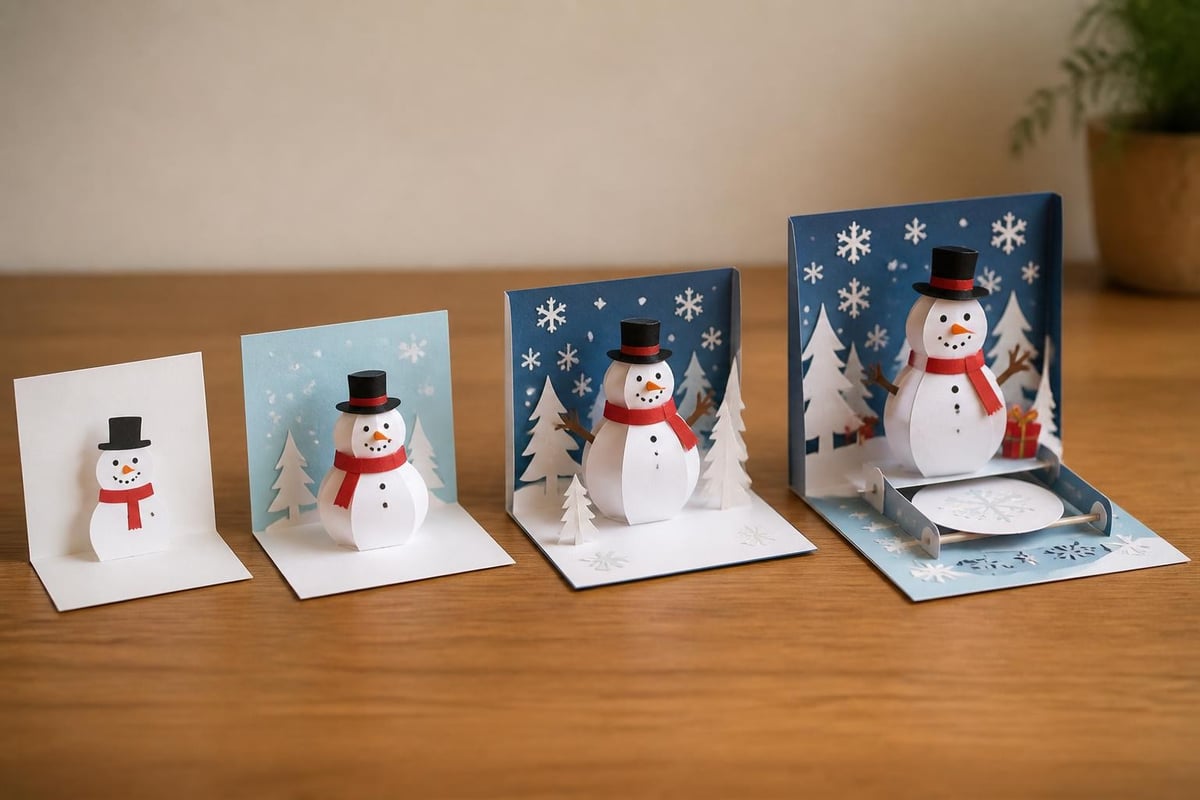
While traditional pop up snowman designs feature the classic three-tier body with coal buttons and carrot nose, innovative variations capture consumer attention and differentiate product offerings in competitive markets.
Thematic Adaptations
Modern designers incorporate contemporary themes that resonate with specific demographics. Sports enthusiasts might appreciate snowmen wearing team jerseys or holding equipment. Music lovers enjoy designs featuring instrument-playing snowmen. These niche variations allow businesses to target specialized markets while maintaining the universal appeal of the snowman character.
Popular thematic variations include:
- Professional snowmen in business attire or uniforms
- Activity-based designs showing snowmen skiing, skating, or sledding
- Family groupings with parent and child snowman figures
- Cultural interpretations incorporating regional winter traditions
- Interactive elements like spinning accessories or sliding components
The versatility of the pop up snowman concept allows designers to experiment while maintaining the essential charm that makes these cards perennially popular.
Technical Innovations
Advanced paper engineering techniques continue pushing creative boundaries. Multi-layered designs create enhanced depth perception, while kinetic elements add unexpected movement. Some designers incorporate pop box card principles to create snowmen that expand in multiple dimensions.
Light and sound integration represents the cutting edge of pop up snowman innovation. LED elements hidden within the card base can illuminate the snowman figure, while micro speakers play festive music or recorded messages. These additions transform traditional cards into memorable interactive experiences.
Production Challenges and Solutions
Manufacturing pop up snowman cards at commercial scale presents unique challenges that require specialized solutions. Understanding these obstacles helps businesses set realistic expectations and maintain quality standards.
Assembly Complexity
Unlike flat greeting cards that can be fully automated, pop up snowman cards require significant hand assembly. Each structural component must be attached precisely to ensure proper function. Rushed assembly leads to misaligned elements that fail to pop up correctly or collapse prematurely.
Quality manufacturers invest in training programs that develop skilled artisans capable of consistent, precise work. Assembly stations equipped with proper lighting, alignment guides, and quality tools enable workers to produce cards that meet exacting standards. A strict quality control process catches errors before products reach customers.
Material Consistency
Variations in paper stock create assembly challenges and finished product inconsistencies. Humidity affects paper behavior, causing expansion or contraction that impacts precise tolerances. Temperature fluctuations during storage or shipping can warp components, compromising card function.
Professional operations maintain climate-controlled environments throughout production and storage. Material testing protocols verify each paper batch meets specifications before entering production. These precautions ensure every pop up snowman card performs as designed, regardless of when or where it was manufactured.
Customization Options for Business Clients
Corporate clients increasingly seek customized pop up snowman cards for holiday marketing campaigns, client appreciation programs, and employee recognition initiatives. These specialized applications demand flexibility in design and production capabilities.
Branding Integration
Custom designs can incorporate company logos, brand colors, and specific messaging while maintaining the charming appeal of the pop up snowman concept. Subtle branding ensures the card feels personal rather than purely promotional. Strategic placement of corporate elements balances marketing objectives with the greeting card's fundamental purpose.
Businesses exploring custom creative pop-up greeting cards discover how branded snowman designs create lasting impressions that generic cards cannot match. The three-dimensional format ensures recipients notice and remember the sender, extending marketing impact beyond the initial interaction.
Volume and Timing Considerations
Corporate orders typically involve larger quantities with specific delivery deadlines. Holiday campaigns require cards to arrive well before distribution dates, accounting for assembly time, quality inspection, and international shipping when applicable. Experienced manufacturers work backwards from client deadlines to establish production schedules that guarantee on-time delivery.
Minimum order quantities for custom pop up snowman designs vary by manufacturer, with most requiring commitments of 500 to 1,000 units for fully custom work. Smaller orders might select from semi-custom options that offer limited personalization of existing designs. Understanding these parameters helps businesses plan budgets and timelines effectively.
Educational and Therapeutic Applications
Beyond commercial greeting cards, the pop up snowman serves valuable roles in educational settings and therapeutic contexts. The combination of visual appeal, tactile engagement, and achievement satisfaction makes these projects particularly effective.
Classroom Integration
Teachers use pop up snowman projects to teach mathematical concepts, artistic principles, and fine motor skills simultaneously. Students learn geometry through angle calculations, measurement through precise cutting, and sequencing through assembly steps. The engaging nature of creating a pop up snowman maintains student interest through challenging learning objectives.
Resources like those from Maths Week Ireland demonstrate how educators integrate pop-up card creation into STEM curricula, making abstract concepts concrete through hands-on application.
Therapeutic Benefits
Occupational therapists incorporate pop up snowman crafting into treatment plans targeting fine motor skill development, hand-eye coordination, and cognitive sequencing abilities. The structured nature of template-based designs provides clear objectives while allowing creative expression through decoration and embellishment choices.
The satisfaction of watching a flat template transform into a dimensional pop up snowman delivers positive reinforcement that encourages continued engagement. This emotional reward component enhances therapeutic outcomes while making sessions more enjoyable for participants.
Marketing Strategies for Pop Up Snowman Cards
Successfully marketing pop up snowman cards requires understanding target demographics and selecting appropriate channels to reach them. The premium nature of these products influences both messaging and distribution strategies.
Target Audience Segmentation
Different customer segments value distinct aspects of pop up snowman cards. Craft enthusiasts appreciate the artistic complexity and handmade quality. Parents and grandparents seek cards that delight children and become treasured keepsakes. Corporate buyers focus on impression impact and brand representation.
Primary market segments include:
- Craft hobbyists and DIY enthusiasts
- Parents, grandparents, and family-focused consumers
- Corporate gift and marketing professionals
- Specialty gift retailers and boutiques
- Event planners and professional organizers
Tailoring marketing messages to each segment's priorities improves conversion rates and customer satisfaction. Highlighting relevant benefits ensures prospects understand why pop up snowman cards justify premium pricing compared to standard alternatives.
Digital and Physical Marketing Channels
Social media platforms excel at showcasing the dramatic transformation of pop up snowman cards. Short videos demonstrating the opening mechanism capture attention and communicate value instantly. User-generated content featuring customers' reactions provides authentic testimonials that influence purchasing decisions.
Physical retail environments benefit from display samples that customers can manipulate. Experiencing the pop-up mechanism firsthand overcomes skepticism about whether the product delivers the promised effect. Point-of-purchase displays with interactive samples significantly boost conversion rates compared to packaged-only presentations.
Quality Standards and Customer Expectations
Meeting customer expectations requires establishing and maintaining rigorous quality standards throughout the production process. The pop up snowman's mechanical nature means quality failures are immediately obvious and disappointing.
Functional Testing Protocols
Every pop up snowman card should undergo functional testing before leaving the production facility. Testers verify smooth opening, proper pop-up angle, structural stability, and secure attachment of all components. Cards failing any criterion return for correction or disposal, preventing defective products from reaching customers.
Batch sampling provides statistical quality assurance for large production runs. Random selection of finished cards from each batch undergoes comprehensive testing. Consistent pass rates indicate stable processes, while failures trigger investigation and corrective action.
Visual Quality Inspection
Beyond mechanical function, visual presentation significantly impacts customer satisfaction. Inspection protocols check for clean cuts without ragged edges, precise alignment of decorative elements, consistent coloring, and absence of adhesive residue or smudges. These aesthetic factors distinguish professional products from amateur attempts.
Premium manufacturers implement multi-stage inspection, with quality checks occurring at key production points rather than only final inspection. This approach catches errors early, reducing waste and ensuring consistent standards throughout every production run.
The pop up snowman represents where artistry meets engineering in the greeting card industry, creating products that transform simple holiday greetings into memorable experiences. Whether crafting individual cards using templates or producing thousands for commercial distribution, understanding the mechanical principles, material requirements, and quality standards ensures successful outcomes. For businesses seeking to offer premium pop-up cards without investing in specialized manufacturing infrastructure, partnering with experienced producers provides access to professional quality and efficient production. The3dCards combines traditional craftsmanship with modern precision technology to deliver pop-up greeting cards that exceed customer expectations across wholesale and custom applications.