
The art of creating handmade pop up cards has evolved into a sophisticated craft that combines traditional paper engineering with contemporary design sensibilities. These dimensional greetings transform a simple folded card into an interactive experience, surprising recipients with intricate three-dimensional structures that spring to life upon opening. Whether you're a hobbyist exploring creative expression or a professional seeking to understand manufacturing techniques, the world of handcrafted pop-up cards offers endless possibilities for innovation and personal connection.
Mục Lục
- 1 Understanding the Fundamentals of Pop-Up Card Construction
- 2 Design Principles for Memorable Cards
- 3 Step-by-Step Creation Process
- 4 Advanced Techniques and Innovations
- 5 Occasion-Specific Design Considerations
- 6 Commercial Applications and Business Opportunities
- 7 Educational Resources and Skill Development
- 8 Troubleshooting Common Challenges
- 9 Inspiration and Creative Development
- 10 Sustainability and Eco-Friendly Practices
- 11 Marketing Your Handmade Creations
- 12 The Future of Pop-Up Card Crafting
Understanding the Fundamentals of Pop-Up Card Construction
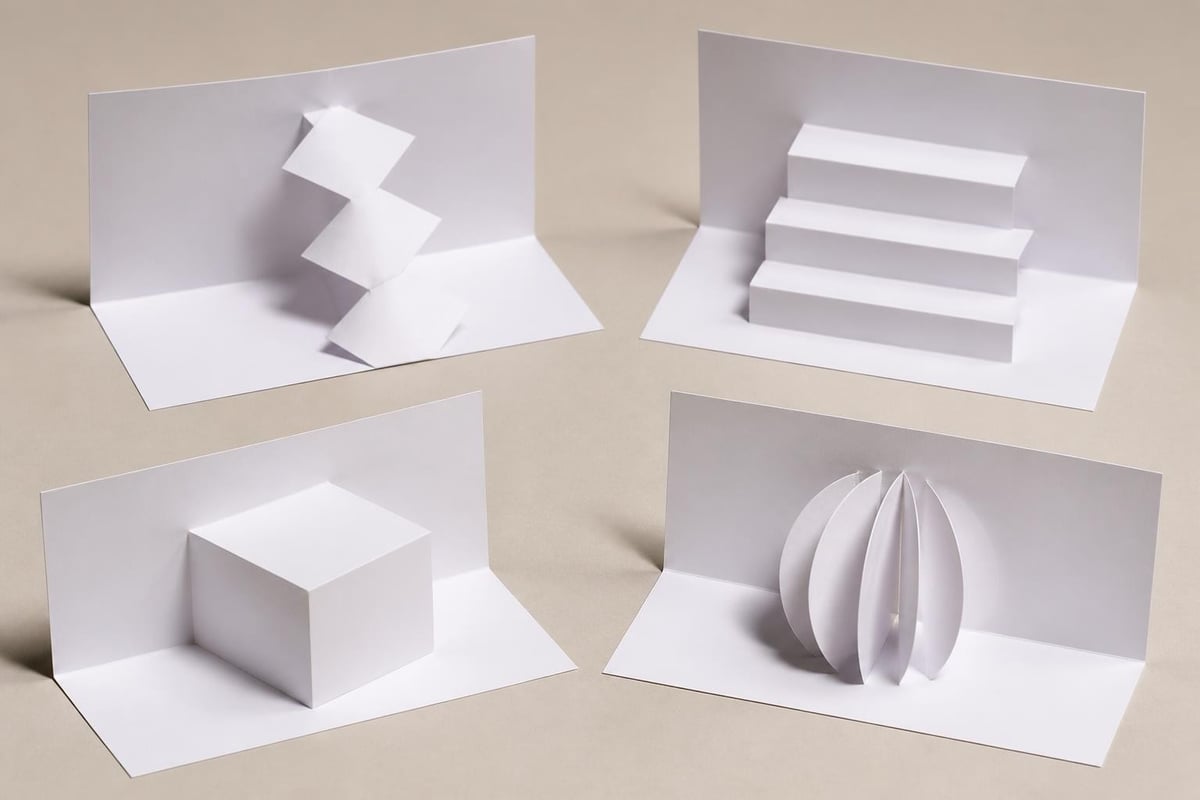
Creating handmade pop up cards requires mastering several foundational techniques that form the backbone of all pop-up mechanisms. The basic principle involves strategically placed cuts and folds that allow paper elements to move from a flat position to a raised three-dimensional form when the card opens.
Essential Paper Engineering Techniques
The most fundamental mechanism in pop-up design is the V-fold, which creates a simple angled pop-up element. This technique involves scoring and folding paper at specific angles to the card's central spine, allowing structures to rise automatically as the card opens. More advanced creators can explore parallel folds, floating layers, and rotating mechanisms to add complexity.
Key techniques include:
- V-fold structures for basic dimensional elements
- Parallel folds creating platforms and stages
- Box mechanisms for architectural depth
- Rotating elements adding motion and surprise
- Floating layers creating illusions of depth
Understanding paper grain direction significantly impacts the success of your handmade pop up cards. Paper naturally folds more cleanly along the grain, so aligning your design with this characteristic ensures crisp, professional-looking folds that stand the test of repeated opening and closing.
Material Selection and Tools
Premium paper choices elevate the quality of handmade pop up cards:
| Paper Type | Weight | Best Use | Characteristics |
|---|---|---|---|
| Cardstock | 80-110 lb | Base cards, structural elements | Sturdy, holds folds well |
| Art Paper | 60-80 lb | Decorative layers, fine details | Smooth finish, excellent for printing |
| Specialty Papers | Varies | Accents, texture | Metallic, embossed, or textured finishes |
| Lightweight Paper | 40-60 lb | Delicate pop-up elements | Easier to fold, less bulk |
The right tools transform challenging techniques into manageable processes. A bone folder creates crisp, professional creases without damaging paper fibers. Precision cutting tools like craft knives or laser cutters ensure clean edges that align perfectly when assembled. Scoring tools create fold lines that guide paper exactly where you want it to bend.
Design Principles for Memorable Cards
Successful handmade pop up cards balance visual impact with structural integrity. The design process begins with conceptualizing how the recipient will experience the card, from the moment they receive the envelope through the surprise reveal when opening.
Planning Your Pop-Up Composition
Start by sketching your design on paper to visualize how elements interact within the three-dimensional space. Consider the viewing angle when the card is opened at different degrees, typically planning for a 90-degree or 180-degree opening. The fundamental principles of pop-up card design emphasize planning layers from back to front, ensuring foreground elements don't block the view of background structures.
Composition considerations:
- Central focal point that draws the eye
- Layered depth creating visual complexity
- Color coordination between pop-up elements and card base
- Negative space preventing visual clutter
- Movement paths that guide the viewer's gaze
Testing your design with inexpensive paper prototypes saves materials and prevents frustration. These mock-ups reveal structural weaknesses, alignment issues, or visual imbalances before committing to final materials.
Color Theory and Visual Harmony
Color selection dramatically affects the emotional impact of handmade pop up cards. Warm colors like reds, oranges, and yellows evoke energy and celebration, making them ideal for birthday or congratulatory cards. Cool colors such as blues, greens, and purples communicate calm and sophistication, suitable for sympathy or professional occasions.
Complementary color schemes create vibrant contrast, while analogous colors produce harmonious, soothing effects. Consider the psychology behind color choices: white symbolizes purity and new beginnings, gold conveys luxury and achievement, and pastels suggest gentleness and care.
Step-by-Step Creation Process
The journey from concept to completed handmade pop up cards follows a methodical workflow that ensures consistency and quality. Breaking the process into distinct phases helps maintain organization and reduces errors.
Phase One: Template Creation and Cutting
Begin by creating or adapting templates for your design. Original designs require careful measurement and mathematical precision to ensure pop-up elements function correctly. Creating your own pop-up cards becomes more accessible when you start with proven templates and modify them gradually as your skills develop.
Transfer your template to cardstock using light pencil marks or a stylus that leaves minimal trace. Precision cutting determines the professional appearance of your finished card. Hand cutting with a sharp craft knife provides control for intricate details, while die-cutting machines offer consistency for repeated designs.
Phase Two: Scoring and Folding
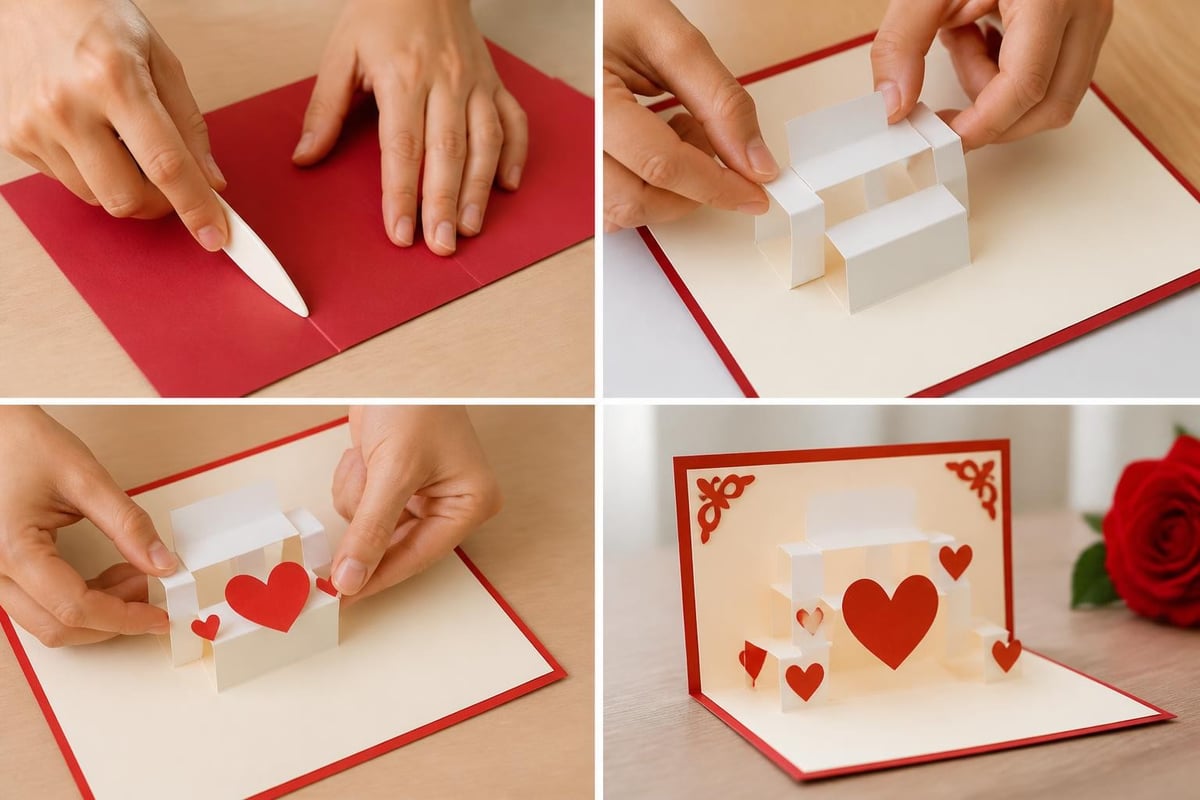
Scoring creates controlled fold lines that guide paper movement. Use a scoring tool or bone folder along a ruler edge to create a compressed line in the paper without cutting through. This preparation ensures folds fall exactly where intended, creating sharp, clean creases.
Folding sequence matters:
- Score all fold lines before making any folds
- Fold base card elements first to establish the foundation
- Pre-fold pop-up elements before attachment
- Test the mechanism before permanent adhesion
- Make final adjustments after assembly
The orientation of folds (mountain or valley) determines whether elements pop up or recede. Mountain folds create ridges that rise above the surface, while valley folds create indentations. Mastering this distinction allows you to create complex, multi-layered structures.
Phase Three: Assembly and Attachment
Attach pop-up elements to the card base using precision adhesive application. Too much adhesive creates bulk and may cause warping, while insufficient adhesive risks elements detaching. Apply small amounts of glue to designated tabs or attachment points, ensuring adhesive doesn't spread to moving parts.
Allow each attachment to dry completely before proceeding to the next element. This patience prevents misalignment and ensures mechanisms move freely. Test the card's opening and closing action repeatedly during assembly to catch and correct issues early.
Advanced Techniques and Innovations
As skills develop, crafters can incorporate sophisticated elements that transform handmade pop up cards into miniature works of art. These advanced techniques require patience and practice but deliver stunning results.
Architectural and Geometric Structures
Creating buildings, monuments, or geometric shapes within pop-up cards demands understanding of proportion and perspective. The art of origami-inspired pop-up designs blends traditional folding techniques with paper engineering principles to create spectacular dimensional effects.
Architectural pop-up cards often feature multiple interconnected elements that unfold in sequence, creating complex cityscapes or landmark replicas. These designs require careful planning of how elements layer and interact, with precise angle calculations ensuring everything aligns perfectly.
Incorporating Mixed Media Elements
Enhancing handmade pop up cards with additional materials adds texture and visual interest. Ribbon, fabric, pressed flowers, or metallic foils create tactile experiences that engage multiple senses. When integrating these elements, consider weight distribution to maintain structural balance.
Mixed media options include:
- Vellum overlays for translucent effects
- Glitter or embossing powder for dimension
- Fabric elements for texture
- Metal accents for sophistication
- Natural materials like dried flowers or leaves
Photographic elements personalize cards dramatically. Printing photos on lighter-weight paper allows them to function as pop-up elements without adding excessive bulk. This technique works exceptionally well for birthday, anniversary, or holiday cards featuring family memories.
Occasion-Specific Design Considerations
Different occasions demand distinct approaches to handmade pop up cards, each with specific design conventions and recipient expectations.
Celebratory Occasions
Birthday cards benefit from bright colors, playful designs, and surprise elements. Consider incorporating the recipient's age, hobbies, or interests into the pop-up mechanism. A floral pop-up card design works beautifully for spring birthdays or for recipients who appreciate botanical themes.
Wedding cards demand elegance and sophistication, often featuring white or cream color palettes with metallic accents. Hearts, rings, bells, or architectural elements like churches make appropriate pop-up subjects. The formality level should match the wedding's tone, from elaborate mechanisms for formal affairs to simpler, rustic designs for casual celebrations.
Seasonal and Holiday Cards
Christmas cards represent the most popular category for handmade pop up cards, with designs ranging from traditional trees and snowflakes to nativity scenes and winter villages. The combination of pop-up mechanisms with lighting elements creates memorable greetings that stand out during the holiday season.
Valentine's Day designs emphasize romantic imagery with hearts, flowers, and love-themed messages. Easter cards feature spring motifs like bunnies, eggs, and blooming flowers. Each holiday offers unique visual vocabulary that can be interpreted through dimensional paper engineering.
Commercial Applications and Business Opportunities
The market for handmade pop up cards extends beyond personal crafting into professional and commercial applications. Understanding these opportunities helps crafters monetize their skills while appreciating the broader industry context.
Custom Design Services
Professional crafters can offer custom design services for clients seeking unique, personalized greetings. Wedding invitations, birth announcements, and corporate event invitations benefit from the memorable impact of three-dimensional designs. Custom pop-up invitation design helps businesses create lasting impressions at important events.
Pricing custom work requires considering design time, material costs, complexity, and market positioning. Established designers charge premium rates for intricate, one-of-a-kind creations that showcase advanced techniques and artistic vision.
Manufacturing and Wholesale
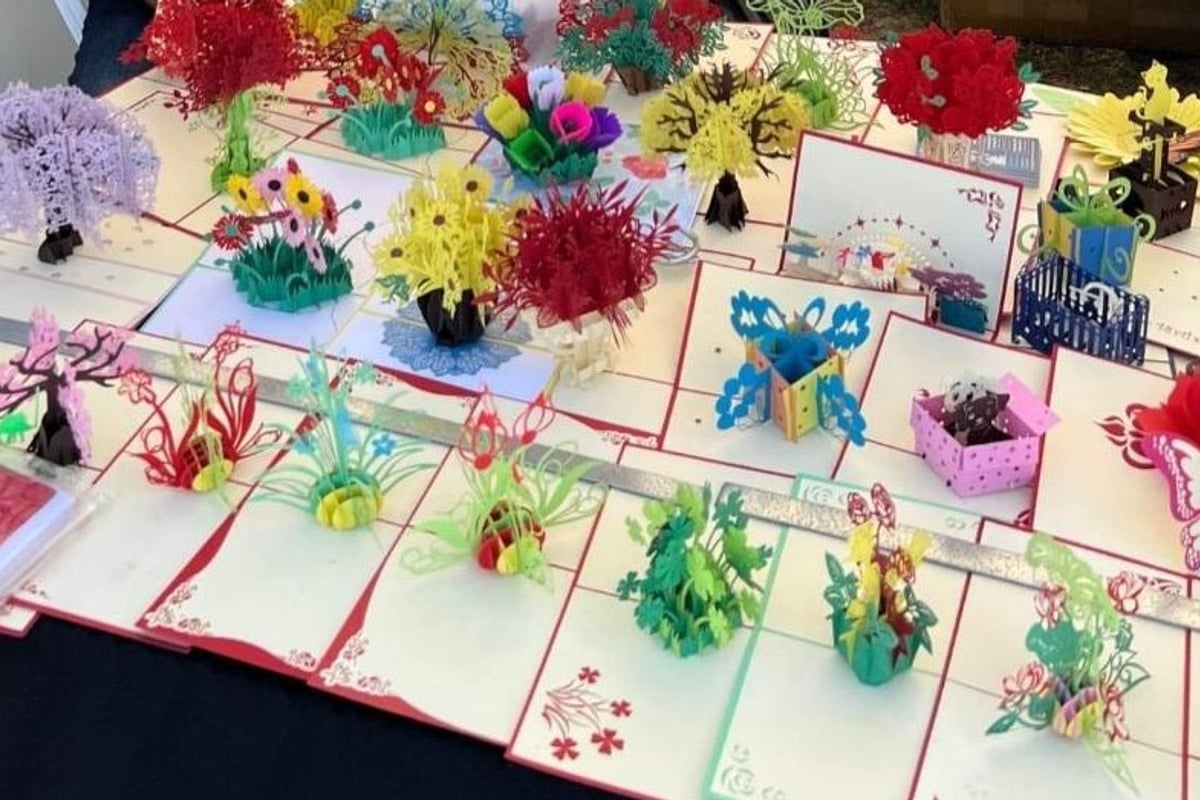
Scaling production from individual handcrafted pieces to commercial quantities requires different approaches and equipment. For businesses looking to offer handmade pop up cards at scale, partnering with experienced manufacturers provides access to precision equipment while maintaining the artisanal quality that defines the category. Working with a pop up greeting card factory in Vietnam enables businesses to source high-quality products using laser cutting technology and skilled assembly teams, ensuring consistency across large orders while preserving the handcrafted aesthetic that customers value.
| Production Method | Volume Capacity | Quality Control | Cost Per Unit | Best For |
|---|---|---|---|---|
| Individual Handcraft | 1-50 units | Artist-controlled | High | Custom, luxury market |
| Small Batch Production | 50-500 units | Manual inspection | Medium-high | Boutique retailers |
| Semi-Automated | 500-5000 units | Quality checkpoints | Medium | Regional distribution |
| Full Manufacturing | 5000+ units | Systematic testing | Low-medium | Wholesale, corporate |
Quality control becomes increasingly important at higher volumes. Establish clear standards for fold precision, alignment accuracy, and finish quality to ensure every card meets expectations regardless of production scale.
Educational Resources and Skill Development
Continuous learning accelerates mastery of handmade pop up cards, with numerous resources available for crafters at all skill levels.
Online Tutorials and Communities
The internet offers extensive learning opportunities, from basic introductions to advanced masterclasses. Video tutorials provide visual demonstration of techniques that are difficult to convey through text alone. Step-by-step pop-up card projects ranging from simple to complex help crafters progressively build skills.
Online crafting communities provide support, inspiration, and feedback. Sharing your work and receiving constructive criticism accelerates improvement while connecting you with fellow enthusiasts. Many creators maintain blogs or YouTube channels documenting their journey, offering both inspiration and practical instruction.
Workshops and Formal Training
In-person workshops offer hands-on guidance and immediate feedback from experienced instructors. These settings facilitate learning complex techniques that benefit from direct observation and real-time correction. Many art centers, craft stores, and community colleges offer pop-up card classes throughout the year.
Workshop benefits include:
- Direct instructor feedback on technique
- Access to specialized tools and materials
- Networking with other crafters
- Structured learning progression
- Hands-on practice with immediate support
Books dedicated to pop-up card design provide comprehensive references that you can consult repeatedly. These resources often include templates, measurement guides, and troubleshooting advice that prove invaluable when working independently.
Troubleshooting Common Challenges
Even experienced creators encounter obstacles when making handmade pop up cards. Recognizing common issues and knowing their solutions saves time and materials.
Structural Problems
When pop-up elements don't stand properly or collapse when the card closes, the issue typically stems from incorrect angle calculations or weak attachment points. Verify that fold angles match your design specifications and that adhesive creates secure bonds without restricting movement.
Cards that don't close flat often suffer from excessive bulk or misaligned elements. Reducing layer thickness, trimming overlapping areas, or adjusting element positioning usually resolves this issue. Sometimes the design itself needs modification to achieve both impressive pop-up action and proper closure.
Aesthetic Challenges
Color bleeding occurs when adhesives containing moisture cause inks or dyes to spread. Using dry adhesives like double-sided tape or low-moisture glues prevents this problem. Testing materials together before final assembly reveals potential compatibility issues.
Visible pencil marks or smudges detract from professional appearance. Use erasable pencil marks sparingly and remove them completely before final assembly. Handle paper with clean hands or wear cotton gloves to prevent transferring oils that attract dirt.
Material Selection Mistakes
Paper that's too heavy resists folding and creates bulky cards that won't close properly. Conversely, paper that's too light lacks structure and produces floppy, unprofessional results. Testing different weights for your specific design identifies the optimal balance between structure and functionality.
Grain direction mistakes cause cards to resist folding or crack along fold lines. Always test fold direction on scrap paper before cutting final pieces, ensuring folds align with the grain for smooth, clean creases.
Inspiration and Creative Development
Maintaining creative momentum requires regular inspiration and experimentation with new ideas for handmade pop up cards.
Finding Design Inspiration
Nature provides endless inspiration with its organic forms, symmetrical patterns, and seasonal changes. Flowers, trees, animals, and landscapes translate beautifully into pop-up formats. Innovative pop-up card ideas demonstrate how everyday subjects become extraordinary through dimensional interpretation.
Architecture offers geometric precision and dramatic vertical elements that showcase pop-up mechanisms effectively. Famous landmarks, cityscapes, or even interior rooms create impressive subjects. Art movements like pop art can inspire card designs that blend artistic style with paper engineering.
Experimental Techniques
Pushing beyond traditional approaches leads to unique creations that stand out. Try unconventional folding patterns, asymmetrical designs, or unexpected color combinations. Floating pop-up cards create illusions of suspended elements through clever engineering and visual trickery.
Experimental directions include:
- Kinetic elements with moving parts
- Sound-producing mechanisms
- Fragrance integration through scented papers
- Interactive elements requiring recipient participation
- Multi-stage reveals with sequential opening
Document your experiments photographically and take notes on what works and what doesn't. This record becomes a valuable reference for future projects and helps refine your personal design style.
Sustainability and Eco-Friendly Practices
Environmental consciousness increasingly influences crafting choices, with many creators seeking sustainable approaches to handmade pop up cards.
Material Sourcing
Choose recycled or sustainably sourced papers from manufacturers committed to responsible forestry practices. Many premium paper companies now offer eco-friendly lines that maintain quality while reducing environmental impact. Certifications like FSC (Forest Stewardship Council) verify sustainable sourcing.
Repurposing materials gives new life to existing resources. Old greeting cards, magazines, or decorative papers can become components in new creations. This approach reduces waste while adding unique vintage or eclectic elements to your designs.
Adhesive and Finishing Choices
Select water-based, non-toxic adhesives that minimize harmful chemicals. These products perform well for paper applications while being safer for both crafters and recipients. Avoid spray adhesives when possible, as they release volatile organic compounds and create waste.
Natural embellishments like pressed flowers, leaves, or plant-based fibers add beauty without synthetic materials. These elements connect your handmade pop up cards to the natural world while maintaining environmental responsibility.
Marketing Your Handmade Creations
For crafters pursuing commercial success, effective marketing connects your handmade pop up cards with appreciative customers.
Building an Online Presence
Professional photography showcases your work's quality and dimensional nature. Photograph cards both closed and open, using natural lighting to capture accurate colors. Video demonstrations showing the pop-up action in motion create engagement that static images cannot achieve.
Social media platforms like Instagram and Pinterest suit visual products perfectly. Regular posting maintains visibility, while hashtags connect you with potential customers searching for handmade cards. Behind-the-scenes content showing your creative process builds authenticity and connection with your audience.
Pricing Strategies
Calculate costs accurately, including materials, time, overhead, and desired profit margin. Handmade pop up cards command premium prices due to their craftsmanship and uniqueness. Research competitors' pricing while recognizing that your specific designs, quality level, and brand positioning justify your pricing structure.
Offer tiered pricing for different complexity levels, making your work accessible to various budgets while allowing customers to choose their investment level. Custom designs naturally command higher prices than standard offerings due to the personalization and exclusive nature.
Sales Channels
Distribution options include:
- Online marketplaces (Etsy, Amazon Handmade)
- Personal website or online store
- Local craft fairs and markets
- Boutique retail partnerships
- Corporate and event clients
- Wholesale to card shops
Diversifying sales channels reduces dependence on any single platform while reaching different customer segments. Each channel requires specific strategies, from optimized product listings for marketplaces to relationship building for wholesale partnerships.
The Future of Pop-Up Card Crafting
Technology continues influencing how creators approach handmade pop up cards, with digital tools complementing traditional techniques rather than replacing them.
Digital Design Integration
Computer-aided design software allows precise planning of pop-up mechanisms with mathematical accuracy. These programs simulate how designs will function before cutting physical materials, reducing waste and experimentation time. Files can be shared digitally, enabling collaboration across distances or creating templates for repeated production.
Laser cutting technology brings precision to handmade pop up cards that would be impossible with manual cutting. This equipment executes intricate designs with perfect repeatability while maintaining the handcrafted assembly that gives these cards their artisanal character. Understanding how premium greeting card manufacturers balance technology with craftsmanship provides insights for creators at any scale.
Personalization Trends
Consumers increasingly value personalized products that reflect individual relationships and occasions. Variable data printing allows customizing cards with names, photos, or specific messages while maintaining pop-up elements' structural integrity. This personalization creates emotional connections that generic cards cannot achieve.
The trend toward experiential gifts positions handmade pop up cards perfectly, as they provide both physical keepsake and interactive experience. Recipients value the time, skill, and thoughtfulness these cards represent, making them more likely to preserve and display them rather than discarding after reading.
Creating handmade pop up cards combines artistic vision with technical skill, offering both personal satisfaction and commercial opportunity. Whether crafting individual pieces for loved ones or developing products for wider markets, mastering these techniques opens doors to creative expression and meaningful connection. The3dCards supports your pop-up card journey with high-quality wholesale options, custom design services, and manufacturing expertise that brings your creative visions to life at any scale.