
The holiday season brings an overwhelming demand for distinctive greeting cards that capture the spirit of celebration and personal connection. Christmas card designers play a vital role in transforming traditional holiday wishes into memorable visual experiences that resonate with recipients. These creative professionals blend artistic vision with commercial awareness, understanding both aesthetic appeal and the practical constraints of production. Whether working for major retailers, boutique studios, or specialized manufacturers, christmas card designers must balance creativity with market demands while staying ahead of evolving trends and consumer preferences.
Mục Lục
- 1 The Role and Responsibilities of Christmas Card Designers
- 2 Current Trends Shaping Christmas Card Design
- 3 Technical Skills and Design Tools
- 4 Working with Clients and Manufacturers
- 5 Market Segments and Specialization Opportunities
- 6 Building a Career as a Christmas Card Designer
- 7 Design Principles for Emotional Connection
- 8 Future Directions in Christmas Card Design
The Role and Responsibilities of Christmas Card Designers
Christmas card designers occupy a unique position in the creative industry, where seasonal deadlines and cultural expectations shape every project. Their work extends far beyond simply drawing festive imagery. These professionals research emerging trends, analyze consumer behavior, and develop concepts that appeal to diverse audiences across different markets.
Core Design Functions
The daily responsibilities of christmas card designers involve multiple stages of creative development. They begin with concept brainstorming, where ideas are generated based on client briefs, market research, and seasonal trends. This phase requires understanding what design elements resonate with contemporary audiences.
Key responsibilities include:
- Developing original illustrations and typography
- Creating color palettes that evoke holiday emotions
- Designing layouts that accommodate both imagery and messaging
- Preparing print-ready files with proper specifications
- Collaborating with production teams on feasibility

Design execution requires technical proficiency in industry-standard software alongside traditional artistic skills. Many christmas card designers maintain both digital and hand-drawn portfolios, as the current market values authentic, handcrafted aesthetics. The ability to translate hand-drawn elements into scalable digital formats has become increasingly valuable.
Balancing Creativity and Commercial Viability
Professional christmas card designers must navigate the tension between artistic expression and market demands. While personal creative vision drives innovation, commercial success depends on understanding retailer requirements, price points, and target demographics. This balance becomes particularly challenging when designing for mass market retailers versus boutique or custom projects.
Design decisions impact production costs significantly. A christmas card designer working with a pop-up card manufacturing factory in Vietnam must consider how intricate three-dimensional elements affect assembly time, material costs, and shipping considerations. These practical constraints shape creative choices from the earliest concept stages.
| Design Consideration | Mass Market Focus | Boutique/Custom Focus |
|---|---|---|
| Production Complexity | Simple, cost-effective | Intricate, premium materials |
| Design Timeline | 12-18 months advance | 6-12 months advance |
| Personalization Options | Limited variables | Extensive customization |
| Price Point Target | Budget-conscious | Premium positioning |
Current Trends Shaping Christmas Card Design
The landscape of holiday card design evolves continuously, influenced by broader design movements, cultural shifts, and technological capabilities. Christmas card designers who stay attuned to these changes maintain competitive advantages in a crowded marketplace.
Minimalist and Modern Aesthetics
Contemporary consumers increasingly favor minimalist winter wonderland themes that emphasize clean lines and restrained color palettes. This trend reflects broader movements toward simplicity in graphic design and appeals particularly to younger demographics seeking alternatives to traditional holiday imagery.
Popular minimalist elements include:
- Single-color illustrations with ample white space
- Geometric interpretations of classic symbols
- Sans-serif typography with generous letter spacing
- Subtle textures rather than busy patterns
- Monochromatic or limited color schemes
The minimalist approach presents both opportunities and challenges for christmas card designers. Simplicity requires exceptional attention to detail, where every element must serve a clear purpose. A single misplaced line or poorly chosen typeface becomes immediately noticeable in uncluttered compositions.
Sustainable and Eco-Conscious Design
Environmental concerns have significantly influenced design decisions across all industries, and christmas card designers increasingly incorporate eco-friendly materials and production methods into their work. This trend extends beyond material selection to encompass the entire design philosophy.
Sustainable design considerations affect visual choices in unexpected ways. Christmas card designers working with recycled papers must account for different textures, color absorption rates, and printing limitations. These constraints can inspire creative solutions, such as designs that celebrate the natural variations in recycled materials rather than fighting against them.


Interactive and Three-Dimensional Formats
The resurgence of physical cards in an increasingly digital world has driven demand for tactile, memorable formats. Christmas card designers now regularly incorporate pop-up mechanisms, foil stamping, embossing, and other dimensional elements that create engaging physical experiences.
Three-dimensional pop-up cards require specialized design expertise. Designers must understand paper engineering principles, considering how flat die-cut shapes transform into standing structures when the card opens. This technical knowledge combines with artistic vision to create designs that surprise and delight recipients.
Technical Skills and Design Tools
Modern christmas card designers require diverse technical competencies spanning traditional art skills and digital proficiency. The most successful professionals maintain flexibility, adapting their toolkit to match each project's specific requirements.
Essential Software Proficiency
Industry-standard design software forms the foundation of professional christmas card design work. Adobe Creative Suite, particularly Illustrator and Photoshop, dominates the field, though emerging tools offer specialized capabilities for specific applications.
- Vector illustration software for scalable artwork and precise layouts
- Photo editing applications for image manipulation and color correction
- 3D modeling programs for visualizing pop-up mechanisms and dimensional elements
- Typography tools for custom lettering and font pairing
- Color management systems for consistent reproduction across print runs
Technical proficiency extends to understanding file preparation for different printing methods. Christmas card designers must know proper color mode conversions (RGB to CMYK), appropriate resolution settings, bleed and trim specifications, and how to set up files for specialty processes like foil stamping or die-cutting.
Traditional Artistic Foundations
Despite digital tools' dominance, traditional artistic skills remain invaluable for christmas card designers. Hand-drawn illustrations, watercolor techniques, and calligraphy add authentic, human touches that resonate with consumers seeking alternatives to generic digital designs.
Traditional skills that enhance digital work:
- Sketching for rapid concept visualization
- Watercolor for organic textures and gradients
- Hand lettering for custom typography
- Paper craft for prototyping dimensional designs
- Color theory for harmonious palette development
The most compelling designs often combine traditional and digital techniques. A christmas card designer might create hand-painted elements, scan them at high resolution, and then refine and compose them digitally. This hybrid approach captures the warmth of handmade art while maintaining the precision and reproducibility required for commercial production.
Working with Clients and Manufacturers
Successful christmas card designers excel not only at creating beautiful designs but also at managing client relationships and collaborating with production partners. These professional skills often determine long-term career success as much as artistic talent.
Understanding Client Briefs and Expectations
Effective client communication begins with thoroughly understanding project requirements. Christmas card designers must ask probing questions that uncover unstated assumptions and clarify subjective terms like "elegant," "festive," or "modern." Misalignments in these early stages cause expensive revisions and missed deadlines.
The brief interpretation process involves translating client wishes into concrete visual strategies. When a client requests a "traditional yet fresh" design, christmas card designers must define what aspects of tradition to preserve and where to introduce contemporary elements. Creating mood boards and reference collections helps align expectations before substantial design work begins.
Collaborating with Production Teams
Understanding manufacturing capabilities and limitations separates professional christmas card designers from hobbyists. Different production methods offer unique possibilities and constraints that should inform design decisions from the outset.
| Production Method | Design Advantages | Design Constraints |
|---|---|---|
| Digital Printing | Full-color freedom, variable data | Limited specialty finishes |
| Letterpress | Tactile impression, artisan quality | Fewer colors, simpler designs |
| Foil Stamping | Metallic accents, premium feel | Single-color areas, additional cost |
| Pop-up Engineering | Dimensional surprise, memorable | Complex assembly, higher price point |
| Die-Cutting | Custom shapes, unique silhouettes | Setup costs, quantity minimums |
Working with specialized manufacturers requires technical dialogue about specifications. Christmas card designers partnering with production facilities must communicate precise measurements, paper weights, scoring positions, and assembly requirements. Clear technical documentation prevents costly production errors and ensures the finished product matches the designer's vision.
Market Segments and Specialization Opportunities
The christmas card industry encompasses diverse market segments, each with distinct design requirements and consumer expectations. Christmas card designers often find success by specializing in particular niches rather than attempting to serve all segments equally.
Corporate and Business Cards
Corporate holiday cards require balancing brand consistency with seasonal celebration. Christmas card designers working in this segment must incorporate company logos, color schemes, and messaging guidelines while creating designs that feel warm and personal rather than sterile and corporate.
Business cards often involve higher budgets, allowing for premium materials and production techniques. Designers can specify heavyweight cardstocks, multiple specialty processes, and custom packaging that elevate the recipient experience. These projects frequently involve customization capabilities, where individual recipient names or personalized messages appear within the design.
Retail Consumer Cards
Mass-market retail cards represent the highest-volume segment, where christmas card designers must create appealing designs that work across broad demographic groups. Success in this space requires understanding what design trends resonate with mainstream consumers while maintaining production costs that support competitive retail pricing.
Retail card lines typically include multiple design variations within cohesive families. Christmas card designers develop coordinated collections that share visual elements, color palettes, or thematic approaches while offering enough variety to appeal to different tastes within a retail display.
Boutique and Art Cards
The boutique segment attracts christmas card designers who prioritize artistic expression and craft quality over mass appeal. These cards command premium prices, allowing for experimental techniques, luxurious materials, and limited production runs that would be economically unfeasible for mass-market products.
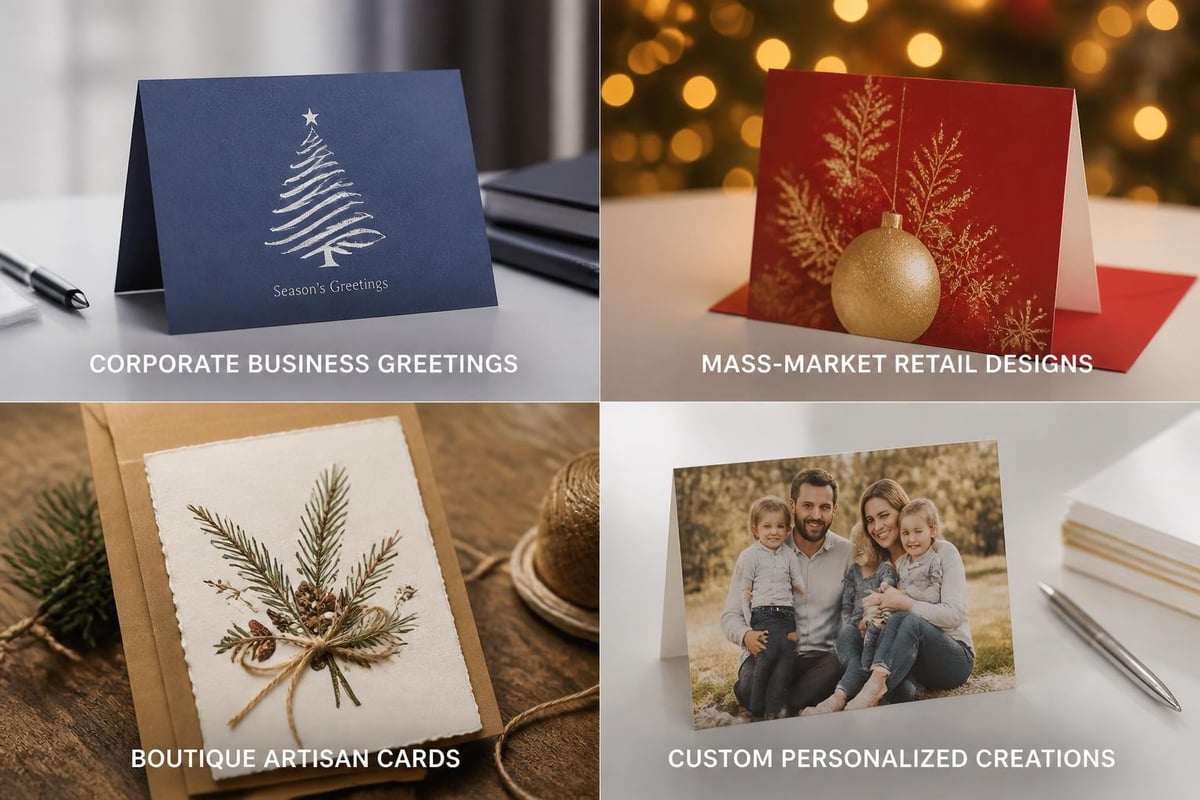
Boutique designers often cultivate distinctive personal styles that become recognizable signatures. Rather than chasing trends, they develop cohesive aesthetic identities that attract customers seeking unique, artist-made products. This approach builds loyal followings willing to pay premium prices for limited-edition designs.
Building a Career as a Christmas Card Designer
Aspiring christmas card designers face unique career development challenges due to the seasonal nature of the product and the industry's competitive landscape. Strategic planning and persistent skill development separate those who build sustainable careers from those who treat card design as occasional side work.
Portfolio Development Strategies
A compelling portfolio demonstrates both creative range and commercial understanding. Christmas card designers should showcase completed projects alongside concept work, illustrating their ability to deliver finished products while maintaining fresh creative energy.
Essential portfolio elements:
- Finished card designs photographed in physical form
- Process documentation showing concept development
- Range of styles demonstrating versatility
- Technical specifications proving production knowledge
- Client testimonials or sales performance data
Digital portfolios should organize work by market segment or design approach rather than chronologically. This structure helps potential clients quickly identify relevant experience. Physical portfolio presentations remain valuable when meeting with boutique retailers or high-end clients who appreciate tangible samples.
Networking and Industry Connections
The greeting card industry operates through relationships built at trade shows, industry events, and professional organizations. Christmas card designers benefit from participating in events where retailers discover new designs and manufacturers showcase production capabilities. These connections often lead to collaboration opportunities and design commissions.
Online communities also provide valuable networking opportunities. Social media platforms allow designers to share work, receive feedback, and connect with potential clients or collaborators. However, building genuine professional relationships requires contributing value to communities rather than simply promoting personal work.
Pricing and Business Considerations
Establishing appropriate pricing remains challenging for christmas card designers, particularly when starting their careers. Rates vary dramatically based on usage rights, production quantities, exclusivity agreements, and market segments. Understanding industry standards while valuing their own expertise helps designers negotiate fair compensation.
Licensing versus work-for-hire arrangements represent fundamentally different business models. Licensed designs generate ongoing royalties based on sales, potentially creating passive income streams but requiring successful retail performance. Work-for-hire projects provide guaranteed payment but transfer all future rights to clients. Christmas card designers must evaluate which model suits their financial needs and risk tolerance.
Design Principles for Emotional Connection
Beyond technical execution and trend awareness, successful christmas card designers understand the emotional psychology underlying holiday greetings. Cards serve as vehicles for expressing sentiment, maintaining relationships, and marking important life moments. Designs that facilitate these emotional functions succeed regardless of stylistic trends.
Creating Universal Yet Personal Designs
The central challenge facing christmas card designers involves creating designs that feel personal to individual senders while appealing to mass markets. This paradox requires understanding the archetypal emotions associated with the season while leaving space for recipients to project their own meanings and memories.
Techniques for balancing universal and personal appeal:
- Using open-ended imagery that invites interpretation
- Providing ample writing space for personalized messages
- Incorporating customizable elements like names or photos
- Choosing sentiments that adapt to various relationships
- Avoiding overly specific references that limit application
Successful designs often employ symbolic rather than literal imagery. A stylized evergreen tree communicates "Christmas" without specifying particular traditions, allowing the design to resonate across diverse cultural practices and personal beliefs associated with the season.
Color Psychology and Seasonal Associations
Color choices profoundly influence emotional response to christmas card designs. While traditional red and green palettes remain popular, contemporary christmas card designers increasingly explore alternative color stories that evoke winter, celebration, or warmth through less conventional combinations.
Understanding modern design trends including metallics and sophisticated neutrals helps designers create fresh takes on classic themes. Navy and gold combinations suggest elegance and formality, while blush pink and sage green create softer, contemporary interpretations of holiday cheer.
| Color Palette | Emotional Association | Best Applications |
|---|---|---|
| Traditional Red/Green | Nostalgic, festive, classic | Family cards, traditional markets |
| Navy/Gold | Sophisticated, elegant, premium | Corporate cards, formal greetings |
| Icy Blue/Silver | Winter wonder, peaceful, serene | Non-religious seasonal cards |
| Warm Neutrals/Copper | Cozy, intimate, modern | Boutique designs, minimalist trends |
| Jewel Tones | Rich, luxurious, vibrant | Premium cards, artistic designs |
Future Directions in Christmas Card Design
The greeting card industry continues evolving in response to technological capabilities, environmental concerns, and changing communication patterns. Christmas card designers who anticipate these shifts position themselves for continued relevance and creative opportunity.
Digital Integration and Hybrid Experiences
While physical cards remain popular, christmas card designers increasingly create designs that bridge physical and digital experiences. QR codes linking to video messages, augmented reality features that animate printed designs, and coordinated social media graphics extend card experiences beyond the physical object.
These hybrid approaches require christmas card designers to develop new technical skills while maintaining core design principles. Understanding how digital components complement rather than replace physical cards helps create cohesive experiences that leverage each medium's strengths.
Personalization Technology and Variable Data
Advances in digital printing technology enable unprecedented personalization at scale. Christmas card designers now create flexible templates accommodating variable text, images, and design elements while maintaining visual coherence across thousands of unique versions.
Designing for variable data requires systematic thinking about hierarchical information and modular layouts. Christmas card designers must anticipate how different content lengths, image orientations, and personalization combinations affect overall composition, creating flexible systems that remain attractive across all variations.
Continued Focus on Craft and Authenticity
Paradoxically, as technology enables more sophisticated production capabilities, consumer preference trends toward handmade aesthetics and artisanal quality. Christmas card designers who master traditional techniques while understanding modern production create designs that feel authentic and personal even when commercially manufactured.
This trend particularly benefits designers who develop signature styles rooted in recognizable hand techniques. Watercolor illustrations, hand lettering, and visible brush strokes communicate human creativity and care, qualities consumers increasingly value in an automated world. The challenge involves capturing these authentic qualities while maintaining consistency across production runs and creating files that reproduce reliably.
Christmas card designers blend artistic vision, technical expertise, and market awareness to create meaningful connections during the holiday season. Whether pursuing minimalist modern aesthetics, elaborate dimensional designs, or handcrafted artisan approaches, success requires understanding both creative principles and production realities. For businesses seeking distinctive holiday greetings that truly stand out, The3dCards offers custom pop-up card manufacturing with the craftsmanship and innovation that transforms simple greetings into memorable experiences.