
The holiday season remains one of the most significant periods for corporate communications and customer outreach. For businesses, organizations, and retailers, ordering bulk Christmas cards represents both a logistical challenge and an opportunity to strengthen relationships with clients, employees, and partners. Understanding the nuances of bulk ordering-from minimum quantities and pricing structures to customization options and production timelines-can transform a routine purchase into a strategic investment in brand visibility and customer loyalty.
Mục Lục
- 1 Understanding Bulk Christmas Card Quantities and Pricing
- 2 Design Trends and Customization Options
- 3 Sustainable and Eco-Friendly Considerations
- 4 Strategic Planning for Corporate Card Programs
- 5 Manufacturing and Quality Control
- 6 Personalization and Variable Data Printing
- 7 Distribution and Logistics Management
- 8 Measuring Return on Investment
- 9 Vendor Selection and Partnership Development
Understanding Bulk Christmas Card Quantities and Pricing
When businesses explore bulk Christmas cards, the first question typically centers on what constitutes "bulk" in the greeting card industry. Most manufacturers define bulk orders as starting at 100 units, though true wholesale pricing typically begins at 500 to 1,000 cards. Volume discounts scale progressively, with significant price breaks occurring at 1,000, 2,500, 5,000, and 10,000 units.
Pricing Structures for Business Orders
The per-unit cost decreases substantially as order quantities increase. A standard folded card with basic printing might cost $2.50 per unit for 100 cards, dropping to $1.20 per unit at 1,000 cards, and potentially reaching $0.60 per unit for orders exceeding 5,000 units. Premium options like pop-up designs command higher prices but maintain similar scaling principles.
Key factors affecting bulk pricing include:
- Paper quality and weight
- Number of printing colors
- Customization complexity
- Envelope quality and style
- Assembly requirements for dimensional cards
- Rush production timelines
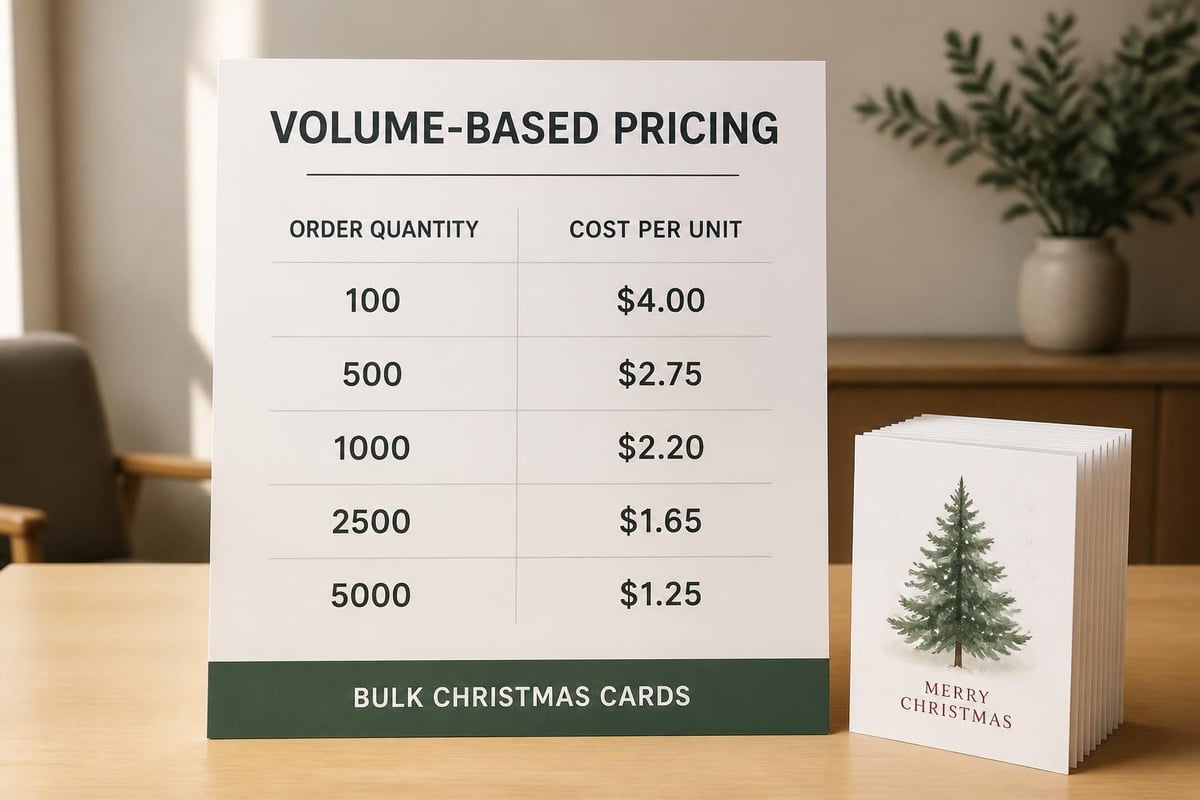
| Order Quantity | Standard Card Cost | Premium Pop-Up Cost | Typical Savings |
|---|---|---|---|
| 100 units | $2.50 | $5.00 | Baseline |
| 500 units | $1.75 | $3.75 | 30% |
| 1,000 units | $1.20 | $2.80 | 52% |
| 5,000 units | $0.60 | $1.90 | 76% |
Production timelines extend with order complexity. Standard designs typically require 2-3 weeks for production and shipping, while custom designs with unique die-cuts or intricate pop-up mechanisms may need 4-6 weeks. Emerging Christmas card trends for 2025 include luxurious finishes and minimalist designs that may require additional production time.
Design Trends and Customization Options
The greeting card market continues to evolve, with businesses seeking designs that reflect contemporary aesthetics while maintaining holiday warmth. For 2026, several distinct trends dominate the bulk Christmas cards landscape.
Contemporary vs. Traditional Design Approaches
Modern businesses increasingly favor minimalist designs featuring clean typography, ample white space, and subtle metallic accents. These contemporary cards appeal to younger demographics and align with corporate branding standards. However, traditional imagery-winter scenes, classic ornaments, and religious iconography-remains popular for customer-facing communications and community outreach.
Customization transforms generic cards into brand ambassadors. Options include:
- Logo integration in tasteful sizes and placements
- Custom messaging that reflects company values
- Color scheme matching to corporate identity
- Personalized signatures from leadership
- Variable data printing for individual recipient names
Pop-up cards represent a premium tier within bulk Christmas cards, offering three-dimensional designs that create memorable unboxing experiences. These intricate cards feature architectural elements, holiday scenes, or custom shapes that spring to life when opened.
Sustainable and Eco-Friendly Considerations
Environmental consciousness increasingly influences purchasing decisions in the greeting card industry. The environmental impact of Christmas card production includes deforestation and transportation emissions, prompting businesses to seek sustainable alternatives.
Green Materials and Production Methods
Forward-thinking manufacturers now offer bulk Christmas cards produced from recycled paper stock, featuring soy-based inks and water-based adhesives. Forest Stewardship Council (FSC) certification ensures paper sources from responsibly managed forests. Carbon-neutral shipping options further reduce environmental footprints.
Sustainable features gaining traction:
- 100% post-consumer recycled paper
- Plantable seed paper that grows into flowers
- Biodegradable glitter alternatives
- Minimal packaging using recyclable materials
- Digital proof approval to reduce waste
| Feature | Traditional Cards | Eco-Friendly Cards |
|---|---|---|
| Paper Source | Virgin pulp | Recycled/FSC |
| Ink Type | Petroleum-based | Soy/vegetable |
| Packaging | Plastic sleeves | Recyclable paper |
| Carbon Impact | Standard | Offset available |
Businesses targeting environmentally conscious demographics should highlight sustainable choices in their card selection. This demonstrates corporate responsibility while potentially attracting like-minded customers and partners.

Strategic Planning for Corporate Card Programs
Successful bulk Christmas card programs require strategic planning that extends beyond simple purchasing decisions. Companies should integrate card distribution into broader holiday marketing and customer retention strategies.
Timeline Development and Coordination
Beginning the planning process in August or September allows adequate time for design development, approval cycles, and production. Market trends in bulk Christmas card printing indicate growing demand for personalization and premium finishes, which require extended lead times.
Recommended planning timeline:
- August-September: Budget approval and vendor selection
- September-October: Design development and customization
- October: Sample approval and order placement
- November: Production and quality control
- Early December: Distribution and mailing
Internal stakeholder coordination proves crucial. Marketing teams handle design and messaging, finance departments manage budgets, and operations coordinate addressing and mailing logistics. Establishing clear roles prevents delays and ensures cohesive execution.
Manufacturing and Quality Control
The quality of bulk Christmas cards directly reflects on sender brands. Understanding manufacturing processes helps businesses make informed decisions and set appropriate expectations.
Production Techniques and Quality Standards
High-quality card production employs several specialized techniques. Digital printing excels for short runs and variable data applications, while offset printing delivers superior quality for large volumes. Die-cutting creates custom shapes, and embossing adds tactile dimension.
For businesses seeking to make a memorable impression, working with a pop-up card manufacturing factory in Vietnam can provide access to specialized production capabilities. These facilities combine high-precision laser cutting technology with skilled artisan assembly to create intricate three-dimensional designs that command attention and demonstrate quality commitment.
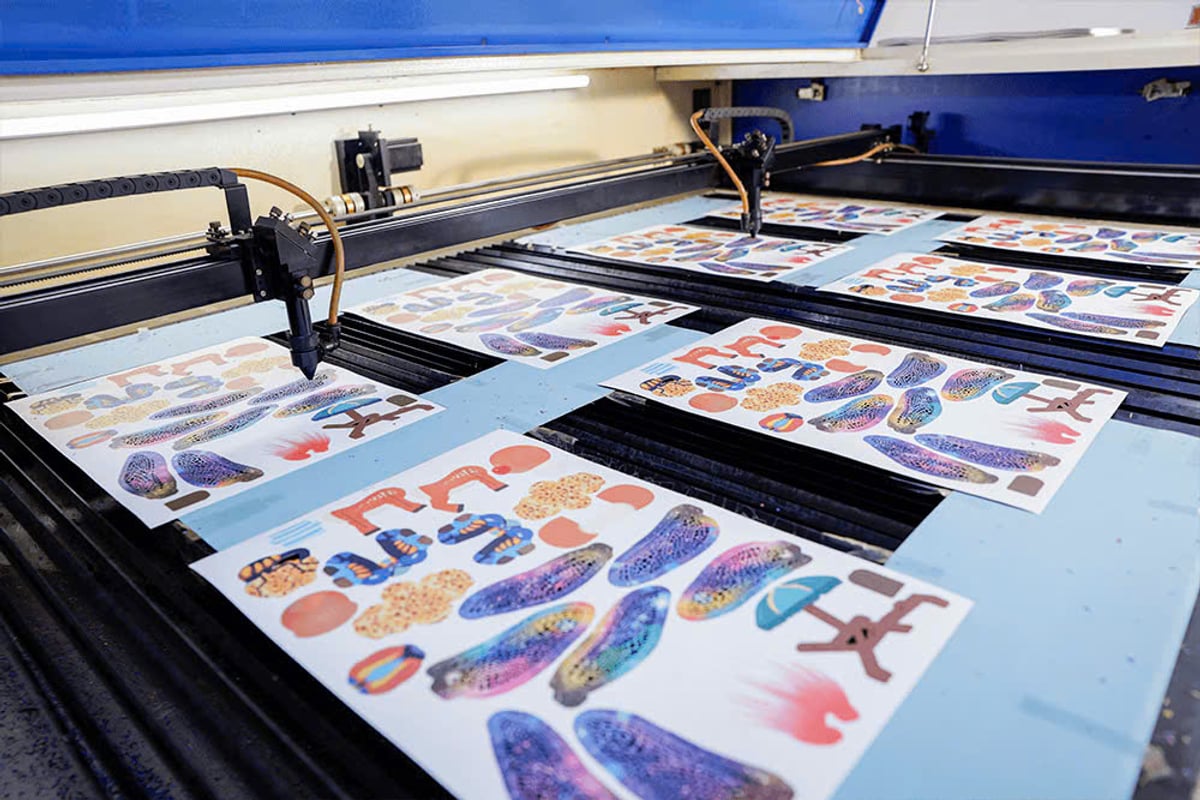
Quality control measures should include paper weight verification, color accuracy checks, and structural integrity testing for dimensional cards. Reputable manufacturers provide pre-production samples allowing design and quality verification before full production runs.
Personalization and Variable Data Printing
Generic greetings increasingly fail to resonate in an era of targeted communications. Variable data printing technology enables bulk Christmas cards with personalized elements that maintain authentic connections at scale.
Technology-Enabled Customization
Modern digital printing systems can alter text, images, and design elements for each card in a production run. This allows businesses to include recipient names, personalized messages, or custom graphics based on customer segments or relationship types.
Personalization options include:
- Individual recipient names in greetings
- Department-specific messaging for employees
- Client account manager signatures
- Custom imagery reflecting recipient interests
- QR codes linking to personalized video messages
| Personalization Level | Complexity | Cost Impact | Engagement Boost |
|---|---|---|---|
| None | Low | Baseline | Minimal |
| Name only | Medium | +15-25% | Moderate |
| Custom message | High | +30-50% | Significant |
| Full custom design | Very High | +75-100% | Maximum |
The greeting card industry’s substantial annual market demonstrates continued consumer appreciation for physical cards, especially when personalized thoughtfully. Businesses investing in personalization typically see higher customer retention and stronger brand recall.
Distribution and Logistics Management
After production, efficient distribution ensures bulk Christmas cards reach recipients at optimal times. Logistics planning significantly impacts campaign effectiveness and costs.
Internal vs. External Fulfillment
Businesses must decide between in-house addressing and mailing versus outsourced fulfillment services. In-house operations provide control but require staff time and postage management. External services offer convenience at premium costs.
Distribution considerations:
- Recipient list accuracy and updates
- International shipping requirements and timelines
- Postage costs and rate optimization
- Tracking and delivery confirmation needs
- Hand-addressing for VIP recipients
Timing proves critical. Cards mailed too early may be discarded or forgotten, while late arrivals miss seasonal impact. Domestic deliveries should mail by December 10th, with international shipments requiring November dispatch dates.
Measuring Return on Investment
Bulk Christmas cards represent marketing expenditures deserving performance evaluation. While direct ROI measurement challenges traditional metrics, several indicators demonstrate program value.
Quantifiable and Qualitative Metrics
Track response rates through dedicated phone numbers, custom URLs, or promotional codes included in cards. Monitor social media mentions and customer feedback referencing holiday greetings. Survey recipients about card impact on brand perception.
Performance indicators include:
- Customer retention rates among card recipients
- New business inquiries following distribution
- Social media engagement and shares
- Employee morale improvements
- Brand sentiment changes
Generational spending trends on Christmas cards reveal younger consumers plan increased holiday card budgets, suggesting growing appreciation for physical greetings in digital-heavy environments. This trend supports continued investment in quality card programs.
Vendor Selection and Partnership Development
Choosing the right supplier for bulk Christmas cards significantly impacts final results. Evaluation criteria should extend beyond pricing to encompass reliability, quality, and service levels.
Critical Vendor Assessment Factors
Request samples of previous work to evaluate printing quality, paper stock, and construction standards. Review customer testimonials and case studies demonstrating successful large-scale projects. Verify production capacity and backup plans for peak season demands.
Essential vendor capabilities:
- Minimum order flexibility
- Rush production options
- Design assistance services
- Proofing and revision processes
- Customer service responsiveness
- Quality guarantees and replacement policies
Establishing long-term vendor relationships yields benefits including priority scheduling, improved pricing, and streamlined reorder processes. Annual contracts can secure favorable rates and guarantee capacity during peak seasons.
Strategic bulk Christmas card procurement combines careful planning, quality standards, and thoughtful customization to create meaningful touchpoints with customers, partners, and employees. By understanding pricing structures, embracing sustainable options, and leveraging personalization technology, businesses transform routine greetings into memorable brand experiences. Whether you need 500 or 50,000 cards, The3dCards offers expert manufacturing capabilities and custom design services to bring your holiday vision to life with premium pop-up cards that recipients will treasure and remember.